This post is also available in: Dutch (below)
Did you know Curaçao has its very own wild Hibiscus plant called Rosita in Papiamentu or Brazilian rosemallow in English. Most people would not even notice this beautiful but small flower and walk by without giving it the credit it deserves. The flower of about 2,5 cm in length has a soft white colour and bright orange coloured stamens. The extended white fluffy parts are part of the pistil (stamper). The wild flower is white, but there is a cultivated variety of the species that has red flowers.
In the dry season it is difficult to find this plant, and the nondescript plant itself will often be seen for a weed. In the rainy season the plant will flower, but usually not very abundantly, and as such is easily overlooked.
It is unclear if the native plant in its wild form can still be found on sister islands Aruba and Bonaire. We know the cultivated red variety of the species can sometimes be found on Aruba.
English name: Brazilian rosemallow
Papiamentu/Papiamento name: Rosita
Scientific name: Hibiscus phoeniceus
Family: Malvaceae (Mallows)
Occurrence (ABC islands): native on Curaçao, status on Aruba and Bonaire unclear.
Publications used:
- Proosdij, A.S.J. van 2012. Arnoldo’s Zakflora: Wat in het wild groeit en bloeit op Aruba, Bonaire en Curaçao. 318 pp. Walburg Pers, Zutphen.
- Plants of The World Online
- Wikipedia

Wilde bloemen: de wilde Hibiscus
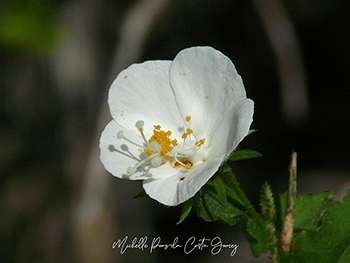
Wist je dat Curaçao een eigen wilde Hibiscusplant heeft, de Rosita zoals het in het Papiaments wordt genoemd of Brazilian rosewallow in het Engels? De meeste mensen zouden deze mooie, maar kleine bloem niet eens opmerken en er achteloos aan voorbijlopen. De bloem, ongeveer 2,5 cm lang, heeft een zachtwitte kleur en feloranje meeldraden. De uitgestrekte, witte, pluizige delen maken deel uit van de stamper. De wilde bloem is wit, maar er bestaat ook een gecultiveerde variant met rode bloemen.
In het droge seizoen is deze plant moeilijk te vinden en wordt hij vaak aangezien voor onkruid. In het regenseizoen bloeit de plant wel, maar meestal niet erg uitbundig, waardoor hij gemakkelijk over het hoofd wordt gezien.
Het is onduidelijk of de inheemse plant in zijn wilde vorm nog steeds voorkomt op de zustereilanden Aruba en Bonaire. We weten wel dat de gecultiveerde rode variant soms op Aruba te vinden is.
Nederlandse naam: –
Papiamentse naam: Rosita
Wetenschappelijke naam: Hibiscus phoeniceus
Familie: Malvaceae (Kaasjeskruidfamilie)
Voorkomen (ABC eilanden): Inheems op Curaçao, status Aruba en Bonaire onbekend
Gebruikte publicaties:
- Proosdij, A.S.J. van 2012. Arnoldo’s Zakflora: Wat in het wild groeit en bloeit op Aruba, Bonaire en Curaçao. 318 pp. Walburg Pers, Zutphen.
- Dutch Caribbean Species Register
- Plants of the World Online
- Wikipedia