This post is also available in Dutch (below)
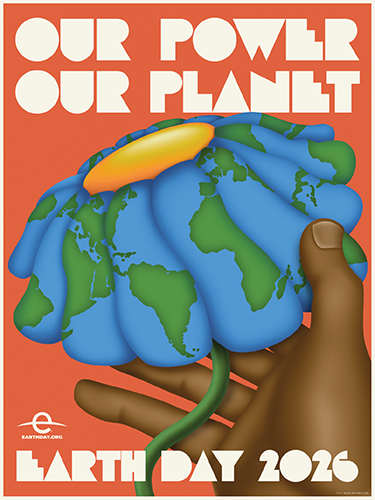
April 22 is the annual Earth Day, a central day around which the Earth Day Network draws attention to themes related to nature and the environment on Earth. Every year, the Earth Day Network chooses a central theme to focus on and emphasize. The theme for 2026 is: Our power, our planet! With the emphasis that every pair of hands can help make a difference. The poster for 2026 is powerful: the Earth as a flower in the hands of man. “Tender, bold, and alive.” He calls it the Earthflower: a reminder that flowers are not decoration, they are connection, linking birds, insects, and humans in the same quiet act of care. The world is in all of our hands. “It always has been,” reads the movement’s website regarding this poster created by Los Angeles artist Miles Wintner.
This theme does not stand alone; every year, previous main themes are also referenced in the movement’s campaigns to continuously draw attention to the issues. For instance, the theme of plastic, which was central in 2018 but only becomes more relevant every year, especially in small Island Development States like Aruba, Bonaire, and Curaçao, where the economies, despite all the growth, are too small to build recycling plants for plastic and other waste, and the islands are slowly but surely threatening to drown under waste, including an enormous amount of plastic.
Reducing plastic use—and thus preventing this material from ending up in nature, including the oceans—was central in 2018, but is now more important than ever. Additionally, there are a wealth of other themes surrounding Earth Day related to the earth and, above all, the protection and preservation of nature. Planting trees, for example, or making energy production more sustainable. and especially reducing energy consumption.
Earth Day is more than 55 years old; for 55 years, a large group of people has been reflecting annually on April 22 on matters concerning the environment and nature. On April 22, 1970, people first began protesting in large groups against the negative consequences of 150 years of industrial development, with an emphasis on smog and the relationship between pollution and issues such as health, development, and biodiversity. Meanwhile, according to the Earth Day Network, more than 1 billion people in 192 countries participate in this day of action annually, where the emphasis lies on political action and citizen participation.
As mentioned, there are a great many themes one can choose from to make a contribution. In addition to planting native trees and other activities to contribute to the health of our planet, one of the easiest things to do yourself is minimizing the use of single-use plastics, despite the fact that local supermarkets do everything they can to force it down our throats.
The incredibly extensive pollution of our oceans and Terrestrial nature reserves containing plastic, and often single-use plastic as well, are ‘mind-boggling’. The use of plastic, or ‘single-use plastics’, has still not been banned from our streets and households; after all, who doesn’t buy a load of disposable cups and plates for convenience at a birthday party? This plastic is not only harmful to animals and plants, but especially to ourselves. It has already been demonstrated that microplastics are present in the fish we so eagerly want to eat, in water that is so neatly packed into water bottles and which we consume en masse, and even in the breast milk our babies receive. In doing so, we are poisoning ourselves, with all the consequences that entails.
What you can do this Sunday on Earth Day: Take personal responsibility for plastic pollution by choosing to refuse, reduce, reuse, and recycle plastic.
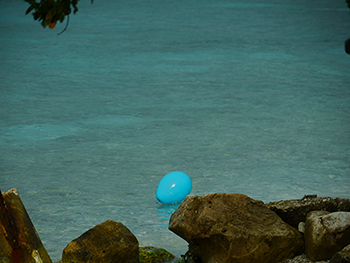
One of the worrying issues having a huge impact on the environment and nature is plastic balloons that are hung on beaches, in the bush, and everywhere else, and are subsequently carelessly left behind or, even worse, discarded, cut away so they fly off. The problem seems solved, but in practice, these balloons end up in the sea, in trees, and on the seabed, where the harmful substances impact flora and fauna. The strings end up wrapped around the legs of animals, and the balloons themselves in the stomachs of (sea) birds, reptiles, fish, and other animals. Certain death is the result. Even worse are the activities involving the release of large quantities of helium-filled balloons for ‘celebration’ or ‘commemoration,’ an activity that seems fun but is in reality nothing more than a mass murder in the making.
Have a good Earth Day!
DISCOVER MORE: Earth Day 2026 | Theme, Activities, Events & Resources

Earth Day 2026
22 april is jaarlijk Earth Day, een centrale dag waar omheen de Earth Day Network thema’s onder de aandacht brengt die te maken hebben met de natuur en het milieu op de aarde. Earth Day Network kiest elk jaar een centraal thema waar aandacht aan wordt besteed en waar de nadruk op wordt gelegd. Het thema van 2026 is: Our power, our planet! Met de nadruk dat elke paar handen kunnen helpen het verschil te maken. De poster voor 2026 is krachtig, de aarde als een bloem in de handen van de mens. ,,Tender, bold, and alive. He calls it the Earthflower: a reminder that flowers are not decoration, they are connection, linking birds, insects, and humans in the same quiet act of care. The world is in all of our hands. It always has been”, zo staat te lezen op de website van de beweging over deze poster die gemaakt is door artiest Miles Wintner uit Los Angeles.
Dit thema staat niet op zichzelf, elk jaar worden ook eerdere hoofdthema’s aangehaald in de campagnes van de beweging, om de problematieken continue onder de aandacht te brengen. Zoals het thema plastic, dat in 2018 centraal stond maar elk jaar alleen maar actueler wordt, zeker op kleine Small Island Development States zoals Aruba, Bonaire en Curaçao waar de economieën ondanks alle groei te klein zijn om recyclingsfabrieken neer te zetten voor plastic en ander afval, en de eilanden langzaam maar zeker dreigen te verzuipen onder het afval waaronder een enorme hoeveelheid plastic.
Het reduceren van plastic gebruik en daarmee dat dit materiaal in de natuur, waaronder de oceanen, terecht komt stond dan in 2018 centraal, maar is dus belangrijker dan ooit. Daarnaast zijn er een schat aan andere thema’s rondom Earth Day die te maken hebben met de aarde en vooral de bescherming en het behoud van de natuur. Het planten van bomen bijvoorbeeld, of de verduurzaming van energieproductie en vooral ook het verminderen van energiegebruik.
Earth Day is meer dan 55 jaar oud, al 55 jaar lang staat een grote groep mensen jaarlijks op 22 april stil bij de zaken die niet goed gaan in het milieu en de natuur. Op 22 april 1970 gingen mensen voor het eerst protesteren in grote groepen tegen de negatieve gevolgen van 150 jaar industriële ontwikkeling, met nadruk op smog en de relatie van vervuiling bij zaken als gezondheid, ontwikkeling en biodiversiteit. Ondertussen doen volgens de Earth Day Network jaarlijks meer dan 1 miljard mensen in 192 landen mee aan deze actiedag, waar de nadruk ligt op politieke actie en participatie van burgers.
Zoals gezegd zijn er een heleboel thema’s waar men uit kan kiezen om een bijdrage te leveren. Naast het planten van inheemse bomen en andere activiteiten om een bijdrage te leveren aan de gezondheid van onze planeet is één van de makkelijkste dingen om zelf te doen, het minimaliseren van het gebruik van single use plastics, ondanks dat de lokale supermarkten er alles aan doen om het ons door de strot te duwen.
De ongelooflijk grote vervuiling van onze oceanen en terrestrische natuurgebieden met plastic, en vaak ook plastic voor eenmalig gebruik zijn ‘mind boggling’. Nog altijd is het gebruik van plastic of te wel ‘single use plastics’ niet verbannen uit het straatbeeld en onze huishoudens, want wie koopt er niet voor het gemak op een verjaardagsfeestje een lading weggooi cups en bordjes. Dit plastic is niet alleen schadelijk voor dieren en planten maar vooral ook voor ons zelf. Ondertussen is namelijk al aangetoond dat microplastics in de vissen zitten die we zo graag willen eten, in water dat zo netjes in waterflesjes wordt gestopt en we massaal consumeren en zelfs al in de moedermelk die onze babies binnenkrijgen. Daarmee vergiftigen we onszelf met alle gevolgen van dien.
Wat u kunt doen deze zondag op Earth Day. Neem persoonlijke verantwoordelijkheid voor plasticvervuiling door ervoor te kiezen het gebruik van plastic te weigeren, te verminderen, opnieuw te gebruiken en te recyclen.
Eén van de zorgelijke zaken die een enorme impact hebben op het milieu en de natuur zijn kunststof balonnen die op stranden, in de mondi en overal worden opgehangen en vervolgens achteloos worden achtergelaten of nog erger worden weggeknipt zodat ze wegvliegen. Het probleem lijkt opgelost, maar in de praktijk eindigen deze balonnen in zee, in bomen en op de bodem waar de schadelijke stoffen een impact hebben op flora en fauna. De touwtjes eindigen om de poten van dieren en de balonnen zelf in de maag van (zee) vogels, reptielen, vissen en andere dieren. Een wisse dood als gevolg. Nog erger zijn de activiteiten waarbij gro hoeveelheden met helium gevulde balonnen worden opgelaten ter ‘viering’of ‘herdenking’, een activiteit dat leuk lijkt maar in werkelijkheid niets anders is dan een massamoord in wording.
Have a good Earth Day!
ONTDEK MEER: Earth Day 2026 | Theme, Activities, Events & Resources