This post is also available in: Dutch (below)
Transition
The islands’ nature is actually always in transition. Between the distinctly dry and wet seasons, there are periods of transition that can sometimes last quite a while. Think of the Carnival season, around February/early March, when the dry season is already upon us, but there are almost always some rain showers that threaten to disrupt the Carnival parades. It’s the period when the rainy season is actually over but still refuses to say goodbye. As humans, we tend to want to see patterns in, among other things, climatological conditions and to be very rigid about them. However, history shows that we can’t be so black and white, because every calendar year, something happens with the weather that’s different from the year before. And especially now, due to ocean warming, certain patterns are changing completely.
Perfect timing for certain flowering plants
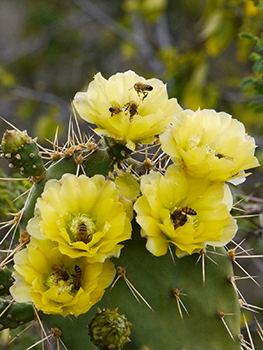
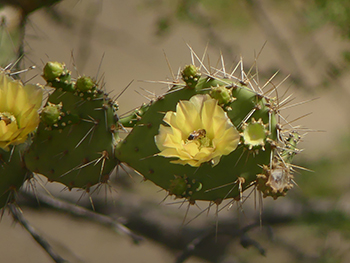
February is truly a month of transition. It still rains a little now and then, but it’s already clearly visible that certain plants are slowly but surely entering a drought dormancy. The leaves are turning orange or yellow and falling off. Most plants are no longer actually flowering but are now busy forming fruit or spreading seeds, and you’ll see many garden birds returning to the garden in larger numbers. One plant that gratefully takes advantage of this period, flowering just as other food sources are becoming scarce, is the Infrou, or Common prickly pear (Opuntia caracassana) as it’s called in English. The plant also flowers during the rainy season, but the real flowering burst only occurs during this transition period. Many plants are completely covered in flower buds, beautiful yellow blooms, and still-green fruits. It’s easy to see that this explosion of blooms is essential for the survival of many animals in nature. It’s a vibrant buzz of bees and wasps visiting the flowers (see photo), butterflies searching for a spot to access the nectar, and a variety of birds vying for the protein-rich pollen and sweet nectar. Both the two species of hummingbirds, the Orange or Venezuelan trupials and Yellow orioles, and the Bananaquits, frequently visit the flowers. And lizards and iguanas feast on the petals and flowerbuds.
Titbits | Natuur in februari – transitie
Transitie
De natuur van het eiland is eigenlijk altijd in transitie. Tussen de expliciete droge tijd en natte tijd zitten perioden van overgang die soms best lang kunnen duren. Denk aan de periode van het karnaval, zo rond februari/begin maart, waarin de droge tijd toch al wel op deur klopt, maar waarin er bijna altijd wel wat regenbuien zijn die de carnavalsstoeten in het honderd dreigen te laten lopen. De periode waarin de regentijd eigenlijk al voorbij is maar toch nog geen afscheid wil nemen. Als mens zijn we heel erg geneigd om patronen te willen zien in onder andere klimatologische omstandigheden en daar heel rigide mee om te gaan. De geschiedenis leer echter dat we het niet zo zwart wit kunnen maken omdat er elk kalenderjaar met het weer wel iets gebeurt dat anders is dan het jaar ervoor. En helemaal nu door de opwarming van de oceaan, bepaalde patronen helemaal anders aan het worden zijn.
Perfecte timing voor bepaalde bloeiende planten
Februari is echt een transitiemaand. Het regent af en toe nog een beetje maar toch is al goed te zien dat bepaalde planten langzaam maar zeker in droogteslaap gaan. De blaadjes worden oranje of geel en vallen al af. De meeste planten bloeien niet echt meer maar zijn nu bezig met de vruchtvorming of zaadverspreiding, en je ziet dat veel tuinvogels weer in grotere aantallen aanwezig zijn in de tuin. Één van de planten die dankbaar gebruik maakt van deze periode, door te bloeien op het moment dat ander voedsel schaarser begint worden is de Infrou, of Spaanse juffer (Opuntia caracassana) zoals de plant in het Nederlands wordt genoemd. Ook in de regentijd heeft de plant bloemen, maar de echte bloeispurt komt in deze transitieperiode pas echt. Veel planten zitten helemaal vol met bloemknoppen, prachtige geel bloeiende bloemen en nog groene vruchten. Dat deze bloei explosie noodzakelijk is voor het overleven van veel dieren in de natuur is heel makkelijk te zien. Het is een gezoem van jewelste met tientallen bijen en wespen die de bloemen bezoeken (zie foto), vlinders die een plekje zoeken om bij de nectar te komen en ook een scala aan vogels die ruzie maken om het eiwitrijke stuifmeel en de zoete nectar te bemachtigen. Zowel de twee soorten kolibries, de oranje en de gele troepiaal en de suikerdiefjes bezoeken de bloemen veelvuldig. En hagedissen en leguanen doen zich tegoed aan de bloemblaadjes en knoppen.