Repost from: Bird watching on Curaçao in December – Bird Watching Curaçao – HOME
This post is also available in: Dutch (below)
Bird watching on Curaçao is a surprise throughout the year. The island may be small (444 square kilometers or +/- 171.4 square miles), but has many small habitats spread out from the east to the west. Even in the inner city of Unesco World Heritage Willemstad, there are many areas where a bird can hide, eat, nest or just rest. Which makes every corner of the island potentially interesting for birders.
Temperatures drop in the month of December and even though it will still be hot on any given day, the temperature difference between day and night is usually enough that local people will grab a pullover or a blanket at night. It is also enough to produce dewdrops on vegetation, an occurrence nature will happily make use of. Several birds and other wildlife will be active drinking dewdrops from vegetation whenever possible and will also be more active in the early morning. Activity will diminish when temperatures rise during the day but it is still worth it to continue birding even when the sun is positioned higher into the sky, as a lot of species will continue their activity throughout the day. If dams are filled due to rain showers, bird diversity increased dramatically in these areas especially of the water stays for weeks on end. If it isn’t the case, even a puddle of water on the side of the street might be enough to attract a variety of bird species, coming to drinks or bath. Keep your camera ready.
A puddle is a golden location
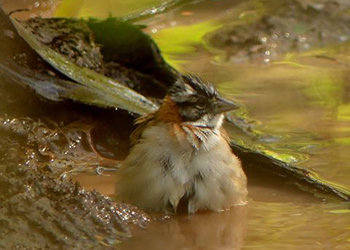
Like suggested in the introduction, it might be very interesting to visit dams on the island in the rainy season. December is in the middle of it, and if some serious rain showers have hit the island, puddles of water in dams and even dams that are completely filled up make for the best birding areas of the season. Availability of food and fresh water attract shorebirds as well as waterbirds such as ducks, coots and gallinules. A perfect birding area is the RAMSAR site of Muizenberg Dam, a hotspot. Check out most recent visits of this site on eBird here: Dam Muizenberg, Curaçao, Curaçao – eBird Hotspot
Besides dams also be on the lookout for water puddles on the side of the road, in nature parks but also in the garden of the location you are staying. These fresh water puddles attract an enormous variety of garden birds as well as birds of prey like the Crested caracara that visit to drink and bath. Or the cute Rufous-collared sparrow, one of the native breeding birds on the island.
Royal terns stay over
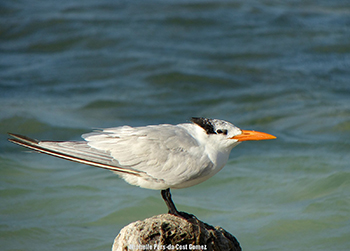
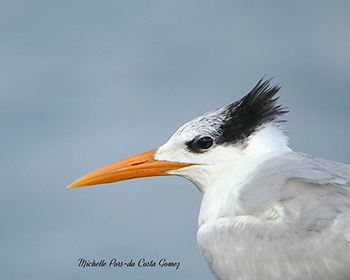
Breeding season of waterbirds such as terns and gulls is from mid March to mid August on the island and many species of terns come to the island especially to breed. This doesn’t mean that there will be no terns on the island in other months of the year. A group of Royal terns stays on the island throughout the year and can be found in winter plumage in several location on the island. A good place to start is at the Water production plant and inlet at Koredor, a popular area close to the Mangrove Park in Otrobanda that attracts many people for daily walks and other sports. Look along the peers and on the poles along the coastline to spot these terns and also Laughing gulls in winter plumage.
Royal terns an Laughing gulls can also be found around the popular surfing beach of Playa Canoa as well as along the coastal area of Marie Pampun.
Ducks visiting: Lesser scaup and American wigeon
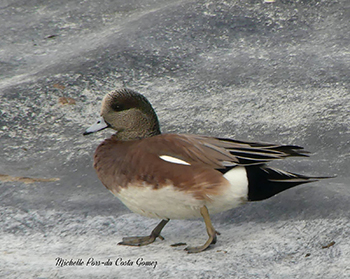
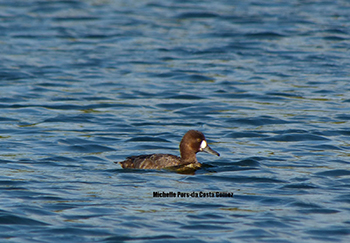
True, several rare duck visitors will visit the island whenever they feel like it, but the months of November and December are especially good for spotting the elusive American Wigeon and Lesser Scaup. Usually its individual birds that will be discovered on fresh water ponds (dams that are filled up, water treatment plants), but occasionally you can find groups of up to 5 individuals in winter plumage. They hide perfectly between the increasing numbers of Blue-winged teals and White-cheeked pintails. Key is to take out the binoculars and scan every single bird individually for the telltale characteristics of these occasional visitors.
Winter-visitors Sanderlings
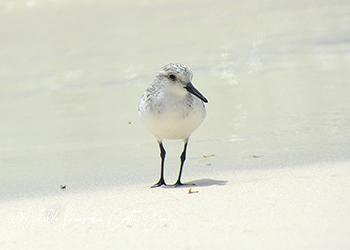
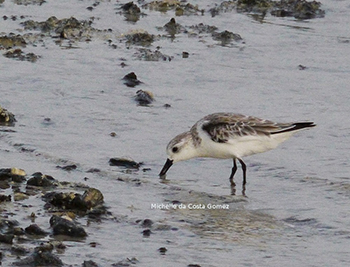
In the summer you will hardly see a Sanderling on the island as almost all birds have moved back to their breeding grounds in the arctic tundra’s of North America. It is in fall and especially winter that you will be able to spot these birds, often mixed up in groups with Ruddy turnstones, along beaches and other coastal areas where they look for food in sand and between pebbles on the beach. The best location to spot larger groups of this species is the RAMSAR-area of Klein Curaçao, a boat ride away from the main island but well worth your birding time, if you have enough patience and are heat and sun resistant, especially during autumn, early winter and spring. The island harbors some interesting bird surprises. Check out the hotspot here: Klein Curaçao, Curaçao, Curaçao – eBird Hotspot.

Vogels spotten op Curaçao in December
De temperaturen dalen in december en hoewel het op elke willekeurige dag nog steeds warm kan zijn, is het temperatuurverschil tussen dag en nacht meestal groot genoeg om te zorgen dat de lokale bevolking ’s nachts een trui of deken pakken. Het is ook voldoende om dauwdruppels op de vegetatie te laten ontstaan, iets waar de natuur graag gebruik van maakt. Verschillende vogels en andere dieren zullen actief zijn om dauwdruppels van de vegetatie te drinken wanneer dat mogelijk is en zullen ook ’s ochtends vroeg actiever zijn. De activiteit neemt af wanneer de temperaturen overdag stijgen, maar het is nog steeds de moeite waard om vogels te blijven spotten, zelfs wanneer de zon hoger aan de hemel staat, omdat veel soorten de hele dag actief blijven. Als dammen volstromen door regenbuien, neemt de vogelrijkdom in deze gebieden enorm toe, vooral als het water wekenlang blijft staan. Als dat niet het geval is, kan zelfs een plas water aan de kant van de weg al genoeg zijn om verschillende vogelsoorten aan te trekken die komen drinken of baden. Houd je camera bij de hand.
Een plas is een gouden locatie
Zoals in de inleiding al werd gesuggereerd, kan het erg interessant zijn om dammen op het eiland te bezoeken tijdens het regenseizoen. December ligt midden in het seizoen, en als er flinke regenbuien op het eiland zijn gevallen, vormen de plassen water in dammen, en zelfs volledig gevulde dammen, de beste plekken om vogels te spotten. De beschikbaarheid van voedsel en zoet water trekt steltlopers en watervogels aan, zoals eenden, meerkoeten en waterhoentjes. Een perfecte plek om vogels te spotten is het RAMSAR-gebied van de Muizenbergdam, een ware hotspot. Bekijk de meest recente bezoeken aan deze locatie op eBird hier: Dam Muizenberg, Curaçao, Curaçao – eBird Hotspot
Let naast dammen ook op waterplassen langs de weg, in natuurparken, maar ook in de tuin van uw accommodatie. Deze zoetwaterplassen trekken een enorme verscheidenheid aan tuinvogels aan, evenals roofvogels zoals de kuifcaracara die er komen drinken en baden. Of de schattige roodkraaggors of Andesmus, een van de inheemse broedvogels van het eiland.
Koningssterns blijven op het eiland
Het broedseizoen van watervogels zoals sterns en meeuwen loopt van half maart tot half augustus op het eiland en veel soorten sterns komen speciaal naar het eiland om te broeden. Dit betekent echter niet dat er in andere maanden van het jaar geen sterns op het eiland te vinden zijn. Een grote groep koningssterns blijft het hele jaar door op het eiland en is in winterkleed op verschillende plekken te zien. Een goede plek om te beginnen is bij de waterzuiveringsinstallatie en de inham bij Koredor, een populaire plek vlakbij het mangrovepark in Otrobanda die veel mensen trekt voor dagelijkse wandelingen en andere sporten. Kijk langs de pieren en op de palen langs de kustlijn om deze sterns en ook lachmeeuwen in winterkleed te spotten.
Koningssterns en lachmeeuwen zijn ook te vinden rond het populaire surfstrand Playa Canoa en langs de kust van Marie Pampoen.
Eenden die het eiland bezoeken: Kleine toppereenden en Amerikaanse smienten
Het klopt dat verschillende zeldzame eendensoorten het eiland bezoeken wanneer ze daar zin in hebben, maar de maanden november en december zijn bijzonder geschikt om de ongrijpbare Amerikaanse smient en de Kleine toppereend te spotten. Meestal worden individuele vogels aangetroffen bij zoetwaterpoelen (dammen die gevuld zijn, waterzuiveringsinstallaties), maar af en toe kun je groepen van maximaal 5 exemplaren in winterkleed zien. Ze verschuilen zich perfect tussen de toenemende aantallen Blauwvleugel-talingen en Bahama pijlstaarteenden. Het is belangrijk om de verrekijker te gebruiken en elke vogel afzonderlijk te bekijken op de kenmerkende eigenschappen van deze incidentele bezoekers.
Winterbezoekers: Strandlopers
In de zomer zul je nauwelijks een Drieteenstrandloper op het eiland zien, omdat bijna alle vogels zijn teruggekeerd naar hun broedgebieden in de arctische toendra’s van Noord-Amerika. Vooral in de herfst en winter kun je deze vogels spotten, vaak in groepen met steenlopers, langs stranden en andere kustgebieden waar ze voedsel zoeken in het zand en tussen de kiezels. De beste plek om grotere groepen van deze soort te zien is het RAMSAR-gebied van Klein Curaçao, een boottochtje vanaf het hoofdeiland, maar zeker de moeite waard als je geduld hebt en goed tegen de hitte en zon kunt, vooral in de herfst, vroege winter en lente. Het eiland herbergt een aantal interessante vogelverrassingen. Bekijk de hotspot hier: Klein Curaçao, Curaçao, Curaçao – eBird Hotspot