This post is also available in: Dutch (below)
The Teku di palu, also known as Yerba di cabai, tree bromeliad, or Tillandsia (Tillandsia flexuosa), is an epiphytic plant that grows in areas on the islands with high humidity. These are usually higher-lying areas such as the Christoffelberg, Zevenbergen, and Tafelberg on Curaçao, the higher-lying limestone hills on Bonaire and Aruba, and sometimes also in other humid areas along the coast and in ravines where humidity is also high. This plant grows on top of other plants since it does not produce its own stem or trunk. It uses the other plant to grow as high as possible and capture the necessary sunlight.
Epiphytes, NOT parasites
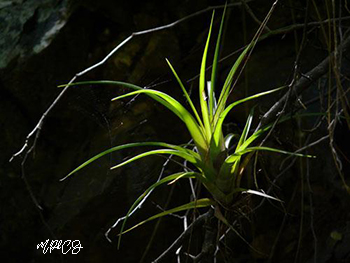
Tillandsias or tree bromeliads are not parasites; they do not extract water and nutrients from the plant on which they grow. For this type of plant, which does grow on others but causes them no harm, the group name epiphytes applies. However, sometimes the number of epiphytes on a single tree becomes so large that their weight can cause branches to break off. There are various types of bromeliads to be found on the island, all of which look different and have different flowering patterns and flower colours.
Pink flowers
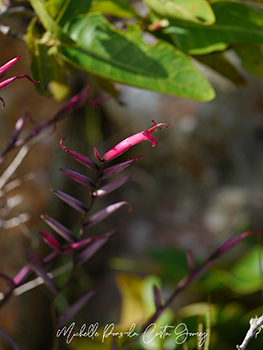
This Tillandsia flexuosa has long, thin, deep pink flowers that seem perfect for the long beaks of hummingbirds. In reality, however, the flowers are usually much too long for the hummingbirds to reach the nectar deep inside the flower. The inventive hummingbirds have come up with a solution for this, which is why you often see these birds drilling a hole next to the heart of the flower to extract the nectar, a practice known as nectar raiding. Besides hummingbirds, other birds do this as well. A good example is the Sugarbird, which also all too often makes use of a hole already made in the flower by another bird. Various moth species are also known to visit these types of plants to drink up the nectar with their long tongues. It is not entirely clear which species of insects and/or birds are responsible for the pollination of these plants.
English name: Tillandsia/ Tree bromeliad/ Twisted airplant
Papiamentu/Papiamento name: Teku di palu (C, B), Yerba di cabai (A)
Scientific name: Tillandsia flexuosa
Family: Bromeliaceae (bromeliads)
Occurrence (ABC islands): native on Aruba, Bonaire and Curaçao
Publications used:
- Proosdij, A.S.J. van 2012. Arnoldo’s Zakflora: Wat in het wild groeit en bloeit op Aruba, Bonaire en Curaçao. 318 pp. Walburg Pers, Zutphen.
- Dutch Caribbean Species Register
- The Online Flora of Curaçao
- Plants of the World Online
- Useful Tropical Plants
- Wikipedia

Wilde bloemen: Teku di palu (Tillandsia flexuosa)
De Teku di palu, ook wel Yerba di cabai, boombromelia of Tillandsia (Tillandsia flexuosa) genaamd, is een epifytische plant die groeit in gebieden op de eilanden met een hoge luchtvochtigheid. Dan zijn meestal hoger gelegen gebieden zoals op Curaçao de Christoffelberg, Zevenbergen en de Tafelberg, op Bonaire op de hoger gelegen kalkheuvels en soms ook in andere vochtige gebieden langs de kust en in rooien waar de luchtvochtigheid ook hoog ligt. Deze plant groeit bovenop andere planten aangezien het geen eigen stengel of stam produceert. Het gebruikt de andere plant om zo hoog mogelijk te groeien en zo noodzakelijk zonlicht op te vangen.
Epifieten, GEEN parasieten
Tillandsia’s of boombromelia’s zijn geen parasieten, ze onttrekken namelijk geen water en voedingsstoffen aan de plant waarop ze groeien. Voor dit type planten die wel op anderen groeien maar deze geen schade berokkenen is de groepsnaam epifyten van toepassing. Soms komt het voor dat de hoeveelheid epifyten op één boom echter zo groot worden dat het gewicht ervan ervoor zorgt dat er takken kunnen afbreken. Er zijn verschillende soorten bromelia’s te vinden op het eiland, die er allemaal anders uitzien en een verschillende bloeiwijze en kleur bloemen hebben.
Roze bloemen
Deze Tillandsia flexuosa, heeft lange, dunne, dieproze bloemen die perfect lijken voor de lange snavels van kolibries. In werkelijkheid zijn de bloemen echter meestal veel te lang voor de kolibries om de nectar diep in de bloem te bereiken. Daar hebben de inventieve kolibries wat op bedacht en daarom zie je deze vogels vaak een gat boren naast het hart van de bloem om de nectar eruit te halen, een praktijk die nectarroof wordt genoemd. Naast kolibries doen ook andere vogels dit. Een goed voorbeeld is het Suikerdiefje die echter ook maar al te vaak gebruik maakt van een gaatje dat al door een ander is gemaakt in de bloem. Verschillende mottensoorten staan er ook om bekend dat ze dit soort planten bezoeken om de nectar op te drinken met hun lange tong. Het is niet helemaal duidelijk welke soorten insecten en of vogels verantwoordelijk zijn voor bevruchting van deze planten.
Nederlandse naam: Boombromelia/ Tillandsia
Papiamentse naam: Teku di palu (B, C), Yerba di cabai (A)
Wetenschappelijke naam: Tillandsia flexuosa
Familie: Bromeliaceae (bromelia’s)
Voorkomen (ABC eilanden): Aruba, Bonaire en Curaçao (inheems)
Gebruikte literatuur:
- Proosdij, A.S.J. van 2012. Arnoldo’s Zakflora: Wat in het wild groeit en bloeit op Aruba, Bonaire en Curaçao. 318 pp. Walburg Pers, Zutphen.
- Dutch Caribbean Species Register
- The Online Flora of Curaçao
- Plants of the World Online
- Useful Tropical Plants
- Wikipedia