This post is also available in: Dutch (below)
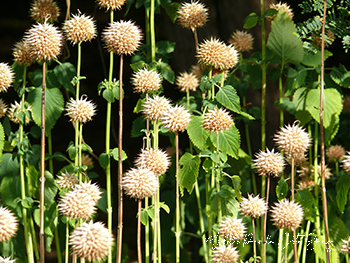
If there is one plant of which its flowers and especially the spherical structure from which the flowers grow, inspire people to do handcrafts and make all kinds of floral arrangements, it is the flower of the Pònpòn. A Pònpòn is the Papiamentu word for pompom, and the shape of the spherical flowering ball is of course a clearcut indication of the name it has. The other name in Papiamentu is less cute, and means graveyard herb if literally translated. In itself it isn’t a weird name as the plant often grows in open spaces that are either sometimes maintained by mowing the grass or taking out the weeds by the hands of man, or spaces where this is done in a natural way, for instance in dams and other areas where water collects in the rainy season and stays put for a longer time. As such slightly unkempt graveyards on the islands are some of the locations where you can find the plant, as well as in areas of former plantations on the island, where dams can still be found as well as areas that are sporadically ‘cleaned out’.
Introduced plant on Curaçao and seemingly on Bonaire
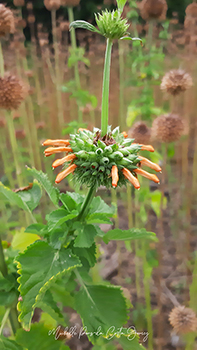
The Pònpòn is a plant that is registered to Curaçao and according to the Dutch Caribbean Species Register also on Bonaire, but not on Aruba. However there are no registrations for the plant on iNaturalist on Bonaire and Aruba. The plant is not native to Curaçao, and not native to the Caribbean and/or the Americas, as it originates from the African continent but has spread out all over the world. Often because of the fact that the spherical flower structures are used in arrangement of dried flowers and also because of conscious introduction as many people love to have these plants in their garden. The flower ‘ball’ from which the flowers grow is bright green in colour and the thin and elongated flowers growing from this structures are bright orange. Many animals are attracted to these flowers, often hummingbirds can be seen drinking the nectar, troupials and Bananaquits boring a hole at the side of the flower to also access the sugary drink. Several species of butterflies and moths also visit the flowers as well as several species of ants.
English name: Klip dagga/ Christmas candlestick
Papiamentu/Papiamento name: Pònpòn/ Yerba di kèrkhòf (Curaçao)
Scientific name: Leonotis nepetifolia
Family: Lamiaceae (mints, deadnettles, or sages)
Occurrence (ABC islands): Introduced on Curaçao and seemingly on Bonaire
Publications used:
- Proosdij, A.S.J. van 2012. Arnoldo’s Zakflora: Wat in het wild groeit en bloeit op Aruba, Bonaire en Curaçao. 318 pp. Walburg Pers, Zutphen.
- Dutch Caribbean Species Register
- Plants of the World Online
- The Online Flora of Curaçao
- Wikipedia

Wilde bloemen: Christmas candlestick (Leonotis nepetifolia)
Als er één plant is waarvan de bloemen – en vooral de bolvormige structuur waaruit ze groeien – mensen inspireren tot knutselwerk en allerlei bloemstukken, dan is het wel de Pònpòn. ‘Pònpòn’ is het Papiaments voor pompon; de vorm van de bolvormige bloeiwijze verklaart natuurlijk direct de naam. De andere Papiamentse naam klinkt minder lieflijk: letterlijk vertaald betekent deze ‘kerkhofkruid’. Op zich is dat geen vreemde naam, aangezien de plant vaak groeit op open plekken die soms door menselijk ingrijpen worden onderhouden (door gras te maaien of onkruid te wieden) of op plekken waar dit op natuurlijke wijze gebeurt, zoals bij dammen en andere gebieden waar zich in het regenseizoen water verzamelt en langere tijd blijft staan. Zo kun je de plant onder meer aantreffen op enigszins verwilderde begraafplaatsen op de eilanden, maar ook op voormalige plantagegronden waar nog dammen aanwezig zijn en waar het terrein slechts af en toe wordt ‘opgeschoond’.
Geïntroduceerde plant op Curaçao en schijnbaar op Bonaire
De Pònpòn is geregistreerd op Curaçao en volgens de Dutch Caribbean Species Register ook op Bonaire, maar niet op Aruba. Er zijn op iNaturalist echter geen registraties voor de plant op Boanire en Aruba. De Pònpòn is niet inheems op Curaçao, noch in het Caribisch gebied of op het Amerikaanse continent; de plant is afkomstig uit Afrika, maar heeft zich over de hele wereld verspreid. Dit komt vaak doordat de bolvormige bloemstructuren worden gebruikt in droogboeketten, maar ook door bewuste introductie, aangezien veel mensen deze plant graag in hun tuin hebben. De bloem-‘bol’ is felgroen van kleur, terwijl de dunne, langwerpige bloempjes die eruit groeien feloranje zijn. Veel dieren voelen zich tot deze bloemen aangetrokken: vaak zie je kolibries nectar drinken, terwijl troepialen en suikerdiefjes een gaatje in de zijkant van de bloem boren om ook bij de suikerhoudende vloeistof te kunnen komen. Ook diverse soorten vlinders en motten bezoeken de bloemen, evenals verschillende soorten mieren.
Nederlandse naam: – (soms Leeuwenoor)
Papiamentse naam: Pònpòn / Yerba di kèrkhòf
Wetenschappelijke naam: Leonotis nepetifolia
Familie: Lamiaceae (lipbloemenfamilie)
Voorkomen (ABC eilanden): Geïntroduceerd op Curaçao en blijkbaar ook op Bonaire.
Gebruikte publicaties:
- Proosdij, A.S.J. van 2012. Arnoldo’s Zakflora: Wat in het wild groeit en bloeit op Aruba, Bonaire en Curaçao. 318 pp. Walburg Pers, Zutphen.
- Dutch Caribbean Species Register
- Plants of the World Online
- The Online Flora of Curaçao
- Wikipedia