Repost from: Birdwatching on Curaçao in February – Bird Watching Curaçao – HOME
This post is also available in: Dutch (below)
Bird watching on Curaçao is a surprise throughout the year. The island may be small (444 square kilometers or +/- 171.4 square miles), but has many small habitats spread out from the east to the west. Even in the inner city of Unesco World Heritage Willemstad, there are many areas where a bird can hide, eat, nest or just rest. Which makes every corner of the island potentially interesting for birders.
Of course the migration season is very interesting for watching bird species that would otherwise not be found on the island. Both the fall migration (mid August to Mid November) and the spring migration (mid April to mid June) are great for watching these unexpected species. However in all the other calendar months things can get interesting for sure, with some species from North America overwintering on the island, and South American and Caribbean species to suddenly appear and disappear. Especially in areas with dams and other waterways that contain fresh water with hiding spaces and a steady food supply, spotting birds can get very exciting. And lets not forget about the native and breeding birds that can be found on the island. Their behaviour and occurrence also makes an very interesting observation opportunity. Here is a short summary of what you can expect in the month of February.
Special ducks visiting
Despite the fact that the bird migration period of spring migration has not yet started and that autumn migration has actually already ended, there are still opportunities to see special birds from December to February. Sometimes they overwinter on the island, for example when the dams contain water, and sometimes they are on their way to unknown places. They actually hardly sit still.
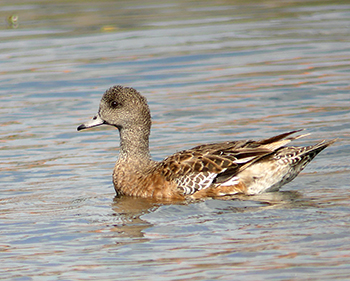
The American Wigeon. The sturdy duck of about 50 centimetres long has a silver-gray head with a characteristic dark brown tint around the eye. The males have an even whiter stripe running across the forehead and a shiny green mask. Chances are you can encounter one of these when going to inundated dams. Take a good pair of binoculars with you because they can hide quite well among other ducks.
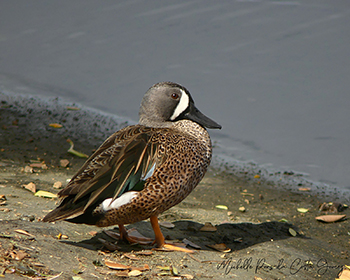
The Blue-winged teal. A smaller duck of about 40 cm with a very visible sexual dimorphism especially now that the males have transformed into their breeding plumage. They do not breed on the island however.
Transformation to breeding plumage
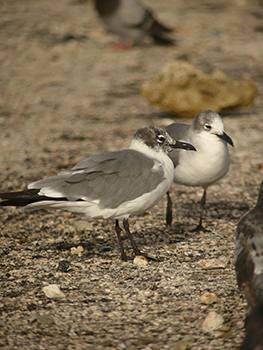
Laughing gulls are slowly but surely becoming more numerous at gathering places such as the wharfs in the city centre and of course Koredor. In the month of February you will also see more and more that the animals are entering the breeding season. The adult animals are slowly but surely getting their breeding plumage consisting of a snow-white plumage with dark grey wings, a dark brown head with a white edge around the eyes, and red beak and legs.
Young birds go into the world
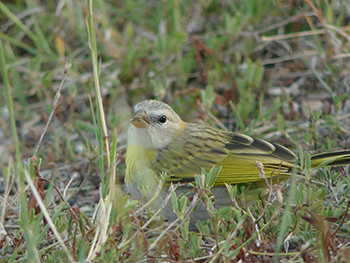
Many bird species that started producing offspring in January finish that by the end of February. Then the young are forced to find their own food and survive. And that is absolutely difficult when the dry season starts. Young Saffron finches still have a very good camouflage for a while, which makes it easy for them to search for grass seed along the road. Now the young are lucky that they live in reasonably large groups where the mass also provides protection and that is no luxury with the Merlin and Peregrine falcon still present on the island.

Vogelspotten op Curaçao in februari
Vogelspotten op Curaçao is het hele jaar door een verrassing. Het eiland is dan wel klein (444 vierkante kilometer of +/- 171,4 vierkante mijl), maar heeft veel kleine habitats verspreid van oost naar west. Zelfs in de binnenstad van Willemstad, een UNESCO-werelderfgoedlocatie, zijn er veel plekken waar een vogel zich kan verschuilen, eten, nestelen of gewoon rusten. Daardoor is elke hoek van het eiland potentieel interessant voor vogelaars.
Natuurlijk is het migratieseizoen erg interessant om vogelsoorten te spotten die anders niet op het eiland voorkomen. Zowel de najaarsmigratie (half augustus tot half november) als de voorjaarsmigratie (half april tot half juni) zijn geweldig om deze onverwachte soorten te zien. Maar ook in alle andere maanden kan het zeker interessant zijn, met sommige soorten uit Noord-Amerika die op het eiland overwinteren, en Zuid-Amerikaanse en Caribische soorten die plotseling verschijnen en weer verdwijnen. Vooral in gebieden met dammen en andere waterwegen met zoet water, schuilplaatsen en een constante voedselvoorraad, kan het spotten van vogels erg spannend zijn. En laten we de inheemse en broedende vogels die op het eiland te vinden zijn niet vergeten. Hun gedrag en aanwezigheid bieden ook een zeer interessante observatiemogelijkheid. Hieronder een korte samenvatting van wat u in februari kunt verwachten.
Bijzondere eenden op bezoek
Ondanks het feit dat de voorjaarstrek nog niet is begonnen en de najaarstrek al is afgelopen, zijn er van december tot februari nog steeds mogelijkheden om bijzondere vogels te zien. Soms overwinteren ze op het eiland, bijvoorbeeld wanneer de dammen water bevatten, en soms zijn ze op weg naar onbekende bestemmingen. Ze zitten eigenlijk zelden stil.
De Amerikaanse smient. Deze robuuste eend van ongeveer 50 centimeter lang heeft een zilvergrijze kop met een karakteristieke donkerbruine tint rond het oog. De mannetjes hebben een nog wittere streep over het voorhoofd en een glanzend groen masker. De kans is groot dat je er een tegenkomt als je naar overstroomde dammen gaat. Neem een goede verrekijker mee, want ze kunnen zich behoorlijk goed verstoppen tussen andere eenden.
De blauwvleugeltaling. Een kleinere eend van ongeveer 40 cm met een zeer duidelijk seksueel dimorfisme, vooral nu de mannetjes hun broedkleed hebben gekregen. Ze broeden echter niet op het eiland.
Verandering naar broedkleed
Lachmeeuwen worden langzaam maar zeker talrijker op verzamelplaatsen zoals de kades in het stadscentrum en natuurlijk Koredor. In februari zul je ook steeds vaker zien dat de dieren het broedseizoen ingaan. De volwassen dieren krijgen langzaam maar zeker hun broedkleed, bestaande uit een sneeuwwit verenkleed met donkergrijze vleugels, een donkerbruine kop met een witte rand rond de ogen en een rode snavel en poten.
Jonge vogels trekken de wereld in
Veel vogelsoorten die in januari beginnen met broeden, stoppen daar eind februari mee. Dan moeten de jongen zelf op zoek naar voedsel en zien te overleven. En dat is ontzettend moeilijk als het droge seizoen begint. Jonge saffraanvinken hebben nog een tijdje een zeer goede camouflage, waardoor ze gemakkelijk graszaad langs de weg kunnen vinden. De jongen hebben het geluk dat ze in redelijk grote groepen leven, waar de massa ook bescherming biedt. Dat is geen luxe met de smelleken en slechtvalk die nog steeds op het eiland voorkomen.