This post is also available in: Dutch (below)
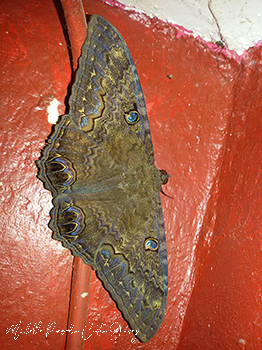
Every year, there are certain animal species that trigger a cloud of reactions on social media. If it isn’t caterpillars stripping entire trees bare with all the fabricated stories surrounding them, then it is the large black moths that occur more frequently in certain years than others and stir up quite a stir. The Black Witch Moth, as the animal is unceremoniously called in English, is also known as Barbulètè ebonit in Papiamento and colloquially often as Barbulètè di morto, loosely translated into Dutch as: the death moth. Both this latter name and the English name already indicate that there is a great deal of superstition surrounding this moth species and that people have serious associations with it. As soon as someone on Curaçao, Aruba or Bonaire posts a photo of this species on social media and asks what kind of moth species he or she has seen, the reaction comes very quickly that the animal brings misfortune and that the death of a loved one will soon follow. As a result, many of these beautiful moths are killed in an attempt to prevent the possible death of a still unidentified loved one.
Wide superstition
The superstition associated with this moth is, however, not confined to our islands. The species is found from Brazil through the United States, including the Caribbean, and in various places, the animals are regarded as harbingers of bad news, illness, and the death of loved ones. However, the superstition is not equally negative everywhere. In certain countries, people believe that if the moth lands on you, you will receive a lot of money, while in other areas, the animals are regarded as the spirits of deceased loved ones. All in all, therefore, there are many stories associated with this animal.
Appearance
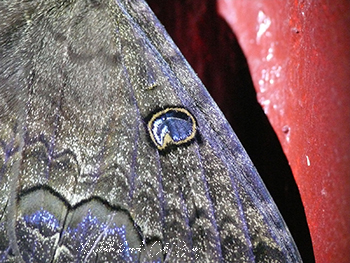
The Black Witch appears mainly at the beginning of the rainy season, where rainfall acts as the trigger for the animals to pupate. Over the past few weeks, small showers have fallen in very limited areas on the islands, and this was apparently enough to trigger a number of these animals. However, you will usually see the majority of them in the months of October and November, when it rains heavily. The moth caterpillars are mainly found on Senna alata plants, Acacia species, and other plant species belonging to the bean family.
The Black Witch moth is the largest moth species found on the islands and can be nearly 15 cm long from wingtip to wingtip.
English name: Black Witch moth
Papiamentu name: Barbulètè ebonit/ Barbulètè di morto
Scientific name: Ascalapha odorata
Family: Erebidae
Occurrence (ABC islands): Aruba, Curaçao, Bonaire
Publications used:
- Debrot, A.O. & Miller, J.Y. 2004. Butterflies and moths of Curaçao, Aruba and Bonaire. 1-100. CARMABI Foundation, Willemstad.
- Groenen, F. 2025. The moths of Bonaire, with a preliminary checklist for the Dutch ABC islands (Lepidoptera). Nederlandse Faunistische Mededelingen 64: 301-332.
- Arnoldo Broeders, M. Fr. 1967. Handleiding tot het gebruik van inheemse en ingevoerde planten op Aruba, Bonaire en Curaçao. Uitgave Boekhandel ,,St.-Augustinus” – Curaçao.
- Proosdij, A.S.J. van 2012. Arnoldo’s Zakflora: Wat in het wild groeit en bloeit op Aruba, Bonaire en Curaçao. 318 pp. Walburg Pers, Zutphen.
- iNaturalist
- Dutch Caribbean Species Register
- Black Witch Moth: Identification, Life Cycle, Facts & Pictures
- Black Witch Ascalapha odorata (Linnaeus, 1758) | Butterflies and Moths of North America
- Wikipedia

De Black witch moth (Ascalapha odorata)
Elk jaar zijn er bepaalde diersoorten die een wolk van reacties oproepen op sociale media. Als het geen rupsen zijn die hele bomen kaalvreten met alle daaromheen verzonnen verhalen, dan zijn het wel de grote zwarte motten die in bepaalde jaren veelvuldiger voorkomen dan andere en de gemoederen flink bezig houden. De Black witch moth, zoals het dier onceremonieel heet in het Engels, wordt in het Papiaments ook wel de Barbulètè ebonit genoemd en in de volksmond vaak de Barbulètè di morto, vrij vertaald naar het Nederlands: de doodsvlinder. Zowel deze laatste naam als de Engelse naam geven al aan dat om deze mottensoort flink veel bijgeloof hangt en men er serieuze associaties mee heeft. Zodra iemand op Curaçao, Aruba of Bonaire een foto plaatst op social media van deze soort en vraagt wat voor mottensoort hij of zij heeft gezien, dan komt er al heel snel de reactie dat het dier onheil brengt en er snel de dood van een naaste zal volgen. Met als gevolg dat veel van deze prachtige motten dood worden gemaakt, in een poging om de mogelijke dood van een nog ongeïdentificeerde dierbare te voorkomen.
Wijd verspreid bijgeloof
Het bijgeloof dat aan deze mot hangt, is overigens niet gebonden aan ons eiland. De soort komt voor van Brazilië tot en met de Verenigde Staten, inclusief het Caribisch gebied, en op verschillende plekken worden de dieren aangezien als brengers van slecht nieuws, ziekte en de dood van naasten. Het bijgeloof is echter niet overal even negatief. In bepaalde landen gelooft men dat als de mot op je komt zitten, je dan veel geld zult gaan krijgen, en in andere gebieden worden de dieren aangezien als de geesten van overleden naasten. Al met al hangen er dus heel veel verhalen samen met dit dier.
Verschijning
De Black Witch komt vooral voor aan het begin van de regentijd, waarbij de regenval de trigger is voor de dieren om te poppen. De afgelopen paar weken is er op zeer beperkte plekken op de eilanden een kleine bui gevallen en dit was blijkbaar genoeg om een aantal van deze dieren te triggeren. Meestal zul je het gros ervan echter gaan zien in de maanden oktober en november, als het goed gaat regenen. De rupsen van de mot zijn voornamelijk te vinden op de planten van de Senna alata, Acacia-soorten en andere soorten planten die behoren tot de bonenfamilie.
De Black Witch moth is de grootste mottensoort die te vinden is op de eilanden en kan van vleugelpunt tot vleugelpunt bijna 15 cm lang zijn.
Nederlandse naam: –
Papiamentse naam: Barbulètè ebonit/ Barbulètè di morto
Wetenschappelijke naam: Ascalapha odorata
Familie: Erebidae (spinneruilen)
Voorkomen (ABC eilanden): Aruba, Curaçao, Bonaire
Gebruikte publicaties:
- Debrot, A.O. & Miller, J.Y. 2004. Butterflies and moths of Curaçao, Aruba and Bonaire. 1-100. CARMABI Foundation, Willemstad.
- Groenen, F. 2025. The moths of Bonaire, with a preliminary checklist for the Dutch ABC islands (Lepidoptera). Nederlandse Faunistische Mededelingen 64: 301-332.
- Arnoldo Broeders, M. Fr. 1967. Handleiding tot het gebruik van inheemse en ingevoerde planten op Aruba, Bonaire en Curaçao. Uitgave Boekhandel ,,St.-Augustinus” – Curaçao.
- Proosdij, A.S.J. van 2012. Arnoldo’s Zakflora: Wat in het wild groeit en bloeit op Aruba, Bonaire en Curaçao. 318 pp. Walburg Pers, Zutphen.
- iNaturalist
- Dutch Caribbean Species Register
- Black Witch Moth: Identification, Life Cycle, Facts & Pictures
- Black Witch Ascalapha odorata (Linnaeus, 1758) | Butterflies and Moths of North America
- Wikipedia