This post is also available in: Dutch (below)
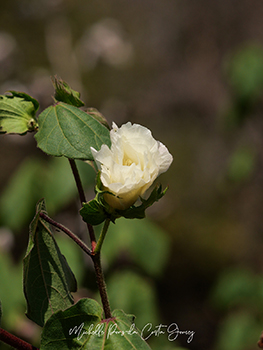
The Cotton plant we know as Katuna or as Catuna is a species of plant that is native to Mexico and the rest of Central America as well as South America and the West Indies, and as such the plant is not described as introduced on the ABC-islands. Its scientific name is Gossypium hirsutum and if you look up the species name you will find it to be the species that is the ‘motherplant’ of most cultivars that are farmed worldwide for their large yield of cotton, commercially speaking. On Curaçao the cultivation of cotton was one of the try-outs for successful planting but it never yielded the amount of cotton needed to make this endeavour lucrative. Now you can find the plant especially along roads, or on other disturbed areas where the original vegetation was destroyed.
The plants often look dried out and struggling, especially in the dry season but can flower even in the direst of circumstances with large, almost rose-like or Hibiscus-like cream coloured and sometimes pinks flowers with a deep burgundy heart. Hummingbirds, Bananaquits and Troupials do visit the flower for the nectar, but more often you will find all kinds of insects in them, probably beetles being the most important in cross fertilisation. The seed-pods are green and grow rapidly. When they are brown they will explode to expose the seeds to the wind. Each seed is buried in thick layer of the cotton fibres the plant produces and will spread by power of the wind.
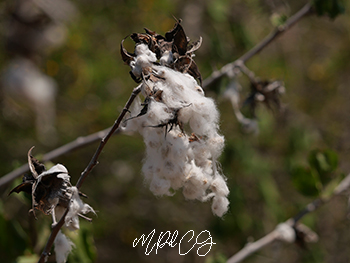
English name: Mexican cotton
Papiamentu/Papiamento name: Katuna (Curaçao), Catuna (Aruba)
Scientific name: Gossypium hirsutum
Family: Malvaceae (Mallows)
Occurrence (ABC islands): Native on Aruba, Bonaire & Curaçao.
Publications used:
- Proosdij, A.S.J. van 2012. Arnoldo’s Zakflora: Wat in het wild groeit en bloeit op Aruba, Bonaire en Curaçao. 318 pp. Walburg Pers, Zutphen.
- Dutch Caribbean Species Register
- Plants of the World Online
- The Online Flora of Curaçao
- Wikipedia

Wilde bloemen: Behaarde katoen (Gossypium hirsutum)
De katoenplant die we als ‘Katuna‘ of ‘Catuna’ kennen, is inheems in Mexico, de rest van Midden-Amerika, Zuid-Amerika en West-Indië; de plant wordt op de ABC-eilanden dan ook niet beschouwd als een geïmporteerde soort. De wetenschappelijke naam is Gossypium hirsutum; wie deze soortnaam opzoekt, ontdekt dat dit de ‘moederplant’ is van de meeste commerciële katoencultivars die wereldwijd worden verbouwd vanwege hun hoge opbrengst. Op Curaçao werd katoenteelt uitgeprobeerd als mogelijke landbouwactiviteit, maar de opbrengst was nooit groot genoeg om het rendabel te maken. Tegenwoordig is de plant vooral te vinden langs wegen of op andere verstoorde terreinen waar de oorspronkelijke vegetatie is verdwenen.
De planten zien er vaak uitgedroogd en kwijnend uit, vooral in het droge seizoen, maar ze kunnen zelfs onder de moeilijkste omstandigheden bloeien. Ze krijgen grote, bijna roos- of hibiscusachtige bloemen die roomkleurig (soms roze) zijn en een diepbourgondischrood hart hebben. Kolibries, suikerdiefjes en troepialen bezoeken de bloemen voor de nectar, maar vaker tref je er allerlei insecten in aan; kevers spelen waarschijnlijk de belangrijkste rol bij de kruisbestuiving. De groene zaaddozen groeien snel. Zodra ze bruin kleuren, barsten ze open en komen de zaden bloot te liggen, klaar om door de wind te worden verspreid. Elk zaadje is ingebed in een dikke laag katoenvezels die door de plant wordt geproduceerd en wordt door de wind meegevoerd.
Nederlandse naam: Behaarde katoen
Papiamentse naam: Katuna (Curaçao), Catuna (Aruba)
Wetenschappelijke naam: Gossypium hirsutum
Familie: Malvaceae (kaasjeskruidfamilie)
Voorkomen (ABC eilanden): Inheems op Aruba. Bonaire en Curaçao
Gebruikte publicaties:
- Proosdij, A.S.J. van 2012. Arnoldo’s Zakflora: Wat in het wild groeit en bloeit op Aruba, Bonaire en Curaçao. 318 pp. Walburg Pers, Zutphen.
- Dutch Caribbean Species Register
- Plants of the World Online
- The Online Flora of Curaçao
- Wikipedia