This post is also available in: Dutch (below)
In May of this year we posted an article with photos by Willemijn Riedijk of Landhuis San Nicolas on Curaçao of a leucistic Tropical mockingbird in that area including the explanation of what leucism is exactly and how it becomes visible in birds. A few weeks later photographer Tom Lacroix shared a series of a Rufous-collared sparrow (Zonotrichia capensis insularis) in the restaurant of Playa Porto Marie on Curaçao that also displayed leucism making the individual very visible among the other birds of its species present in the location.
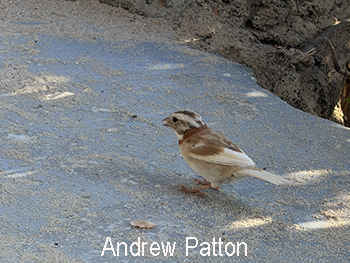
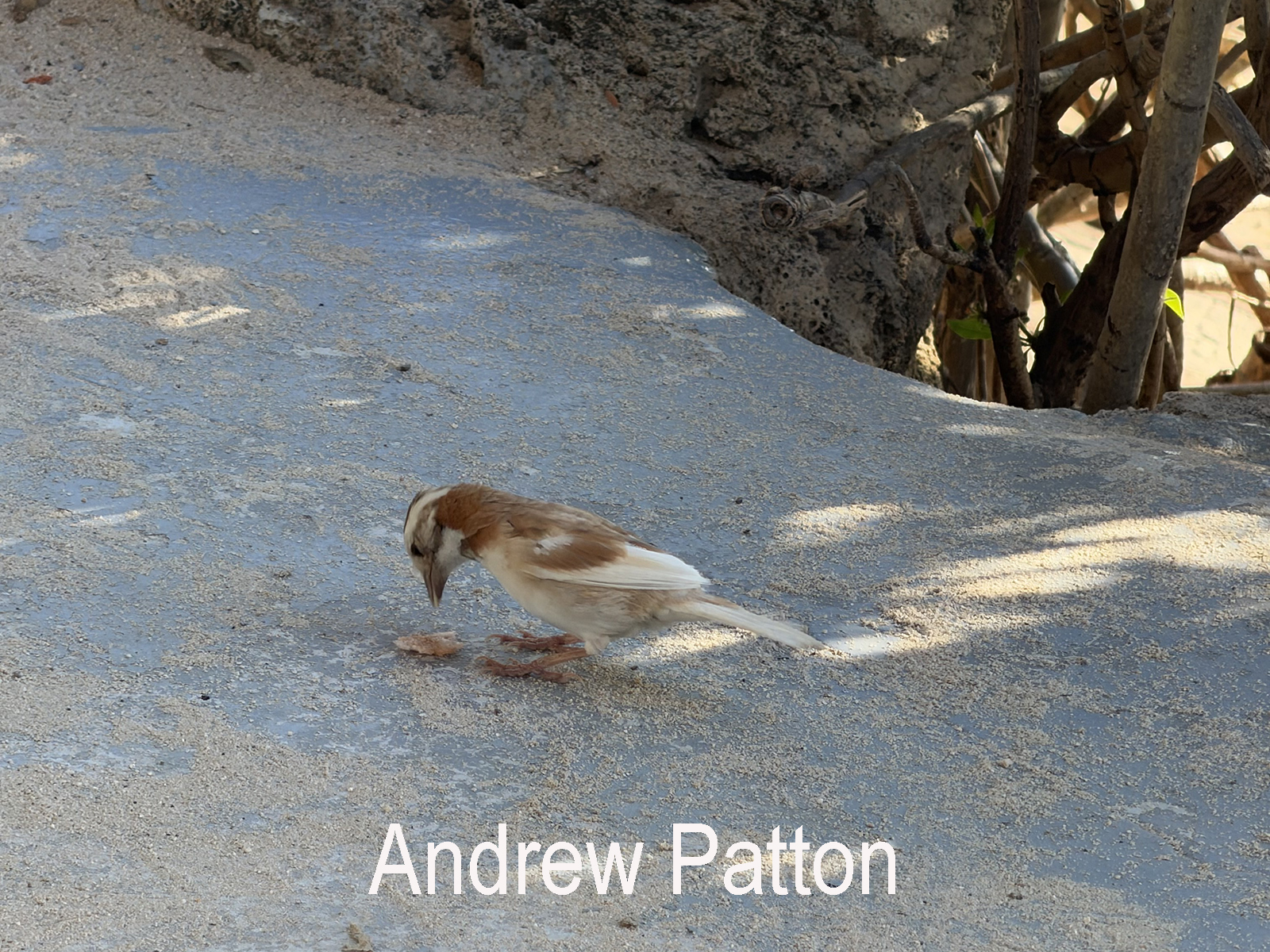
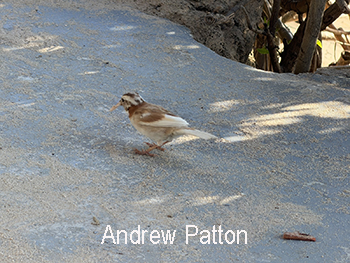
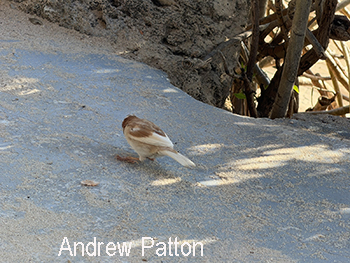
This a follow up to the sighting of that particular bird from October 2026, with photos from island visitor and photographer Andrew Patton who visited the beach and restaurant and managed to capture the bird with his camera.
It is important to summarize the definition of leucism once again as animals that have leucism are often erroneously considered to be albinos. Albinism is a genetic mutation and leucism is not. Leucism is an abnormality in the pigment cells that leads to reduced pigmentation and can affect all types of pigments. Due to the abnormality in the aforementioned pigment cells, they do not develop properly, resulting in a complete or only partial loss of colour in the skin, fur, feathers, or scales of vertebrates. Mammals, birds, reptiles, amphibians, and fish can therefore all exhibit this phenomenon. The abnormality in the pigment cells does not affect the eyes, meaning that organisms with leucism have normally coloured eyes, rather than red ones as is the case with albinism. Leucism characteristics come in various ways, from organisms that lack certain pigment all over the body to individuals displaying only spots of pigment-less scales, feathers or hair. This is because leucism involves defects in the pigment cells themselves. These cells either do not develop properly during embryonic growth, or they produce less pigment. The condition can affect all types of pigmentation, including not only melanin but also the pigments responsible for other colours, such as red, orange, and yellow. As a result, white spots can develop in both the dark and light colour zones of the animals.
The Rufous-collared sparrow described earlier in June (READ HERE), is completely creamy white, with some darker markings still visible.
It can be difficult for animals that have a deviant colouration than their peers to survive in the wild as the are much more conspicuous to predators making them very vulnerable. We were wondering if the Rufous-collared sparrow in question, which appeared to be an adult bird in the earlier photos, would survive for a longer period so we went in search of the bird in July and August. We couldn’t access the area of the restaurant as both the beach and the restaurant were too crowded. Than we received the email by Mr. Patton in October with photos of what appears to be the same leucistic bird that was seen and photographed in June, taken on October 18. In the photos, the bird is seen hopping around the bar area of the restaurant of Porto Marie, eating what appears to be crumbs from the sandy floor. Its plumage appears to be healthy, with the rufous collar more deeply coloured than before.
It is always difficult to say with a 100% certainty that it is the same bird as was seen in the month of June, as feathers wear out, subtly changing form and coloration over time, and birds molt continuously. However, there have been no report of more leucistic birds of the species seen in this specific area over the last couple of months. That is why we urge visitors to the area to look out for this interesting looking bird and continue reporting its sightings with photos if possible. This will give valuable information on the survival rate of these rare animals and circumstances for their survival.
As Mr. Patton wrote in his mail: “I’m not a birdwatcher or wildlife photographer, just someone who happened to notice an unusual little bird while enjoying a day at Playa Porto Mari. I took a few photos out of curiosity, and later asked ChatGPT to help identify it. To my surprise, it led me to your June article about what appeared to be the very same bird!”.
Every sighting counts!

Leucistische roodkraaggors – een foto-update
In mei van dit jaar plaatsten we een artikel met foto’s van Willemijn Riedijk (van Landhuis San Nicolas op Curaçao) over een leucistische Caribische spotlijster in dat gebied. We legden destijds uit wat leucisme precies is en hoe dit bij vogels tot uiting komt. Enkele weken later deelde fotograaf Tom Lacroix een reeks foto’s van een Roodkraaggors (Zonotrichia capensis insularis) bij het restaurant van Playa Porto Marie op Curaçao. Ook dit exemplaar vertoonde leucisme, waardoor het duidelijk opviel tussen de andere vogels van dezelfde soort op die locatie.
Dit is een vervolg op de waarneming van die specifieke vogel, vastgelegd in oktober 2026 door Andrew Patton, een bezoeker van het eiland en fotograaf. Hij bezocht het strand en het restaurant en slaagde erin de vogel op de gevoelige plaat vast te leggen.
Het is zinvol om de definitie van leucisme nog eens kort toe te lichten, aangezien dieren met leucisme vaak onterecht voor albino’s worden aangezien. Albinisme is een genetische mutatie, terwijl leucisme dat niet is. Leucisme is een afwijking in de pigmentcellen die leidt tot verminderde pigmentatie; dit kan betrekking hebben op alle soorten pigmenten. Door deze afwijking ontwikkelen de pigmentcellen zich niet naar behoren, wat resulteert in een volledig of gedeeltelijk kleurverlies in de huid, vacht, veren of schubben van gewervelde dieren. Zoogdieren, vogels, reptielen, amfibieën en vissen kunnen dit verschijnsel allemaal vertonen. Omdat de afwijking in de pigmentcellen geen invloed heeft op de ogen, hebben dieren met leucisme gewoon gekleurde ogen, in tegenstelling tot albino’s, die vaak rode ogen hebben. Leucisme kan zich op verschillende manieren uiten: van dieren die over hun hele lichaam bepaalde pigmenten missen, tot individuen die slechts hier en daar plekken zonder pigment vertonen (in hun schubben, veren of vacht). Dit komt doordat leucisme te maken heeft met defecten in de pigmentcellen zelf: deze cellen ontwikkelen zich niet goed tijdens de embryonale groei, of ze produceren simpelweg minder pigment. De aandoening kan alle typen pigmentatie treffen, niet alleen melanine, maar ook de pigmenten die verantwoordelijk zijn voor andere kleuren, zoals rood, oranje en geel. Hierdoor kunnen er witte vlekken ontstaan in zowel de donkere als de lichtere kleurzones van het dier.
De Roodkraaggors die eerder in juni werd beschreven (LEES HIER), is volledig crèmewit, waarbij nog enkele donkerdere markeringen zichtbaar zijn.
Voor dieren met een afwijkende kleur ten opzichte van hun soortgenoten is het vaak lastig om in het wild te overleven; ze vallen namelijk veel meer op voor roofdieren, wat hen uiterst kwetsbaar maakt. We vroegen ons af of de betreffende roodkraag-gors, die op de eerdere foto’s een volwassen vogel leek te zijn, het langer zou volhouden. Daarom zijn we in juli en augustus op zoek gegaan naar het dier. We konden echter niet bij het restaurant komen, omdat zowel het strand als het restaurant te druk bezocht werden. Vervolgens ontvingen we in oktober een e-mail van de heer Patton, met foto’s van 18 oktober waarop vermoedelijk dezelfde leucistische vogel te zien is als die in juni werd waargenomen en gefotografeerd. Op de beelden is te zien hoe de vogel rondhupt bij de bar van het restaurant op Porto Marie en, zo lijkt het, kruimels van de zanderige vloer eet. Het verenkleed ziet er gezond uit, waarbij de roodbruine kraag een diepere kleur heeft gekregen dan voorheen.
Het is altijd lastig om met 100% zekerheid te zeggen of het om hetzelfde exemplaar gaat als in juni; veren slijten immers, waardoor hun vorm en kleur in de loop van de tijd subtiel kunnen veranderen, en vogels ruien bovendien voortdurend. Er zijn de afgelopen maanden echter geen meldingen binnengekomen van andere leucistische vogels van deze soort in dit specifieke gebied. Daarom roepen we bezoekers op om uit te kijken naar dit bijzondere vogeltje en waarnemingen, indien mogelijk met foto’s, aan ons door te geven. Dit levert waardevolle informatie op over de overlevingskans van dergelijke zeldzame dieren en de omstandigheden waaronder zij kunnen overleven.
Zoals de heer Patton in zijn e-mail schreef: “Ik ben geen vogelaar of natuurfotograaf; ik zag toevallig een ongewoon vogeltje terwijl ik een dagje doorbracht op Playa Porto Mari. Uit nieuwsgierigheid heb ik een paar foto’s gemaakt en later aan ChatGPT gevraagd om het dier te identificeren. Tot mijn verrassing kwam ik zo terecht bij jullie artikel uit juni over wat precies dezelfde vogel bleek te zijn!”
Elke waarneming telt!