This post is also available in: Dutch (below)
Adapted from sister website: Migratory birds galore (3) – the Yellow-billed Cuckoo – Bird Watching Curaçao – HOME
August, September, October and November are yearly high seasons for migratory birds on the islands of Aruba, Curaçao and Bonaire. Many species visit the islands for a short time, some of them staying over for the winter months, on their way to South America to overwinter. The islands provide a much needed location to rest, feed and rebuild fat reserves for the rest of the journey. In this series we illustrate a few of the many species visiting the islands.
Every single year in the month of October, the questions on social media increase about mysterious birds with conspicuous yellow bills, found in gardens, on roads and other locations. The birds appear to be exhausted and lifeless, and often die in pools, by traffic or by cats or dogs.
Yellow-billed cuckoo
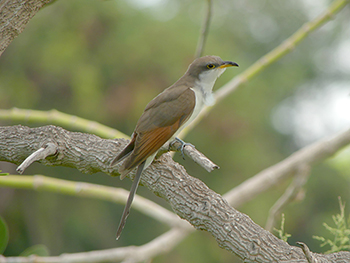
These birds are called Yellow-billed Cuckoos and they are migratory species from North America, making the long journey to the south when winter starts creeping in in their breeding grounds. However, the long journey takes a heavy toll on these birds, and when they arrive on our islands for a much needed stopover to rest and refill their energy reserves before continuing their journey, they are often so extremely exhausted that they will literally fall out of the sky. In this vulnerable state it is essential to them to find fresh water and insects to feed on, to get a little bit of their energy back and have a good rest. Sometimes though, they will not make it to their next snack or drink and perish of sheer exhaustion and undernourishment.
If the birds manage to find food and water in time, they will roam around in the shrubs on the island, searching for insects. After replenishing their fat reserves they will continue their travels to South America, leaving and disappearing from sight as suddenly as they appeared in the first place.
What to do when you find one of these exhausted birds?
First of all, if you have dogs or cats as pets, or you know that there are feral dogs or cats in the vicinity of the location of the bird, make sure to remove it and place it in a safe environment. Usually it is sufficient to keep the bird in a quiet and dark place to minimize stress, in a box for example, with a saucer with water so the bird can drink. After a night of rest in most cases the birds are rested enough to fly away and search for food. Just be sure to open the box in a safe place. If the rest was not enough, make sure you contact local bird specialist on the island.
Who to call if you find an injured bird and/ or a bird that needs help:
Aruba:
Contact the organizations Aruba Conservation Foundation or Aruba Birdlife Conservation for assistance. They have dedicated bird caretakers on call.
Bonaire:
Contact Bonaire Wild Bird Rehab for assistance
Curaçao:
Contact Fundashon Dier & Onderwijs Cariben bij vet Odette Doest
English name: Yellow-billed Cuckoo
Papiamentu/Papiamento name: Kuku pik hel (Bonaire & Curaçao), Cucu Pico Hel (Aruba)
Scientific name: Coccyzus americanus
Family: Cuculidae (cuckoos & road runners)
Occurrence (ABC islands): regular migratory bird on Aruba, Bonaire and Curaçao from North America. Never in large numbers. Usually starts arriving mid to late October.
Publications used:
- Boer, B. de, Newton, E. & Restall, R. 2012. Birds of Aruba, Curaçao and Bonaire. Ardea Christopher Helm, London.
- Wells, J.V. & Wells, A.C. 2017. Birds of Aruba, Bonaire, and Curaçao: a site and field guide. 474pp. Cornell University Press.
- Da Costa Gomez, M. & Pors, L. 2023. Vogels van Curaçao. 322 pp. Private publication.
- Cornell Lab – All About Birds
- Dutch Caribbean Species Register
- eBird.org

Trekvogels – de Geelsnavelkoekoek (Coccyzus americanus)
Gebaseerd op informatie van de zusterwebsite: Migratory birds galore (3) – the Yellow-billed Cuckoo – Bird Watching Curaçao – HOME
Augustus, september, oktober en november zijn jaarlijks de hoogseizoenen voor trekvogels op de eilanden Aruba, Curaçao en Bonaire. Veel soorten bezoeken de eilanden voor een korte periode, sommige blijven er de wintermaanden doorbrengen op weg naar Zuid-Amerika om te overwinteren. De eilanden bieden een broodnodige rustplaats, voedselbron en de mogelijkheid om vetreserves aan te vullen voor de rest van de reis. In deze serie illustreren we een aantal van de vele soorten die de eilanden bezoeken.
Elk jaar in oktober nemen de vragen op sociale media toe over mysterieuze vogels met opvallende gele snavels, die in tuinen, op wegen en op andere locaties worden gevonden. De vogels lijken uitgeput en levenloos en sterven vaak in plassen, door verkeer of door katten of honden.
Geelsnavelkoekoek
Deze vogels heten geelsnavelkoekoeken en zijn trekvogels uit Noord-Amerika die de lange reis naar het zuiden maken wanneer de winter zijn intrede doet in hun broedgebieden. De lange reis eist echter een zware tol van deze vogels. Wanneer ze op onze eilanden aankomen voor een broodnodige rustpauze om hun energiereserves aan te vullen voordat ze hun reis vervolgen, zijn ze vaak zo uitgeput dat ze letterlijk uit de lucht vallen. In deze kwetsbare toestand is het essentieel voor hen om vers water en insecten te vinden om te eten, om wat energie terug te krijgen en goed uit te rusten. Soms halen ze hun volgende hapje of drankje echter niet en sterven ze door pure uitputting en ondervoeding.
Als de vogels erin slagen op tijd voedsel en water te vinden, zwerven ze rond in de struiken op het eiland, op zoek naar insecten. Nadat ze hun vetreserves hebben aangevuld, vervolgen ze hun reis naar Zuid-Amerika en verdwijnen ze net zo plotseling uit het zicht als ze verschenen.
Wat te doen als je een van deze uitgeputte vogels aantreft?
Allereerst, als u honden of katten als huisdieren heeft, of als u weet dat er verwilderde honden of katten in de buurt van de vogel zijn, zorg er dan voor dat u de vogel weghaalt en in een veilige omgeving plaatst. Meestal is het voldoende om de vogel in een rustige en donkere ruimte te plaatsen om stress te minimaliseren, bijvoorbeeld in een doos met een schoteltje water zodat de vogel kan drinken. Na een nacht rust zijn de vogels in de meeste gevallen uitgerust genoeg om weg te vliegen en voedsel te zoeken. Zorg er wel voor dat u de doos op een veilige plek opent. Als de rust niet voldoende was, neem dan contact op met een lokale vogelspecialist op het eiland.
Wie te bellen als u een gewonde vogel en/of een vogel die hulp nodig heeft vindt:
Aruba:
Neem contact op met de organisaties Aruba Conservation Foundation of Aruba Birdlife Conservation voor hulp. Zij hebben toegewijde vogelverzorgers die op afroep beschikbaar zijn.
Bonaire:
Neem contact op met Bonaire Wild Bird Rehab voor hulp.
Curaçao:
Neem contact op met Fundashon Dier & Onderwijs Cariben van dierenarts Odette Doest.
Nederlandse naam: Geelsnavelkoekoek
Papiamentse naam: Kuku pik hel (Bonaire & Curaçao), Cucu Pico Hel (Aruba)
Wetenschappelijke naam: Coccyzus americanus
Familie: Cuculidae (koekoeken)
Voorkomen (ABC eilanden): Trekvogels uit Noord Amerika op Aruba, Bonaire en Curaçao. Nooit in grote aantallen. Meestal voor het eerst gespot mid- tot eind oktober.
Gebruikte publicaties:
- Boer, B. de, Newton, E. & Restall, R. 2012. Birds of Aruba, Curaçao and Bonaire. Ardea Christopher Helm, London.
- Wells, J.V. & Wells, A.C. 2017. Birds of Aruba, Bonaire, and Curaçao: a site and field guide. 474pp. Cornell University Press.
- Da Costa Gomez, M. & Pors, L. 2023. Vogels van Curaçao. 322 pp. Private publication.
- Cornell Lab – All About Birds
- Dutch Caribbean Species Register
- eBird.org