This post is also available in: Dutch (below)
Reposted from: Successful breeding adventures of seabirds on Curaçao – Bird Watching Curaçao – HOME
Every year, hundreds to thousands of birds come to the island of Curaçao to produce their offspring. During the period from mid-March to well into late August, and sometimes even mid-September, various species of terns, gulls, and other bird species come to our island, as well as to Bonaire and Aruba, to search the coast for suitable breeding sites to raise their young. Least Terns, Sandwich Terns, Royal Terns, Common Terns, and Laughing Gulls are a handful of these species that do so. From mid-March onward, warnings are already issued in various areas that the breeding season has arrived and that visitors must be careful not to disturb the birds. In the salt pans of Jan Thiel and Sami Liber, the coastal strip of Playa Kanoa, Koraal Tabak, Shete Boka, Ascencion, Klein Curaçao, and various small areas elsewhere on the island, the birds arrive in mid-March and then choose a spot to breed individually or in groups. This selection process can already be disrupted by the presence of unleashed dogs or human recreationists, so it is important for it to proceed smoothly for a success reproductive story.
Be responsible
Once this selection process has finally succeeded, the partners have found each other, and mating has taken place, eggs can be laid. Sometimes somewhat sheltered, right next to a small limestone rock, or simply out in the open on the bare limestone ground without protection against wind, rain, or sun. The parents are responsible for this protection with their bodies and sit on the eggs to protect them from the elements. Even then, the nests and the parents are vulnerable. Feral cats like to hunt the sitting parents, and rats, mice, and even other bird species come to see if they can steal an egg. Hikers, cyclists, and others who get too close to the breeding colony are attacked by sometimes multiple adult birds that first fly up with loud screeching, then whiz past your head with that same screeching, and if you still don’t listen, may even peck at your head or defecate on you. All of these are warnings that you are causing a disturbance to these animals. The only correct solution in this situation is to turn around immediately and leave the area. Because of the fact that the eggs lie on the ground and are well camouflaged, you only see them when you are standing right on top of them. And who wants to have on their conscience that they wilfully and knowingly destroyed a nest?
Precocial birds
The chicks that eventually hatch are precocial. They wander off from the nest immediately after hatching and seek shelter under stones and rocks or under their parents, who fly back and forth with small fish. That is one of the reasons why so-called ‘rock stacking’, where people build piles of stones believing they are participating in an international craze, can cause such enormous damage. After all, the young birds can no longer find shelter, and if they do so under a wobbly pile of stones, they also run the risk of being crushed by falling stones. As a ‘rock stacker,’ that is than something you can proudly add to your CV. Despite international campaigns to put an end to these practices, there are still even guides who encourage this behavior among visitors on the island. Of course, there are other harmful consequences of this stacking frenzy, but that is for another article.
Learning to fly
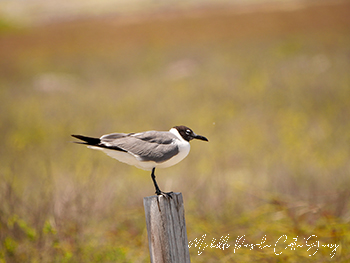
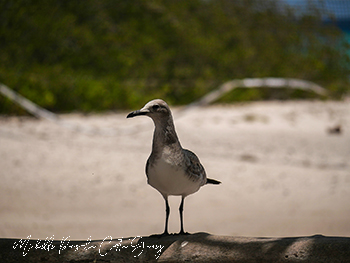
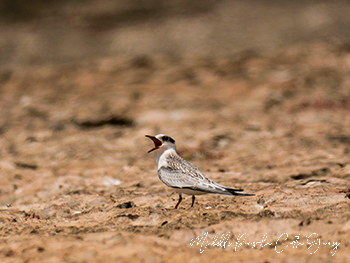
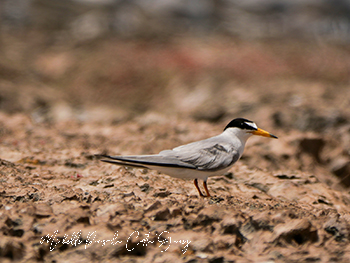
Once the parents of these birds have finally managed to raise the young, the next precarious phase begins: learning to fly. Terns and gulls cover great distances over the sea and therefore must be excellent fliers. This learning process is intensive and exhausting for the small birds and must therefore take place undisturbed. Once they can finally successfully cover short distances, they eventually join their parents at the resting places found across the island. And then you suddenly see young Sandwich Terns, young Least Terns, and young Laughing Gulls, for example, sitting near the salt pans, or at Playa Kanoa, for instance. The young birds can be recognized by their smaller size, their somewhat grayish or brownish appearance lacking the adult markings, and especially the fact that they still beg their parents for a fish. Their own fishing training is not yet advanced enough for them to do this independently, so they certainly still receive some from their parents. The photos accompanying this article show, among others, a young Laughing Gull—probably born somewhere on Curaçao this year—an adult Laughing Gull for comparison, as well as a young and an adult American Little Tern. Of these, the chick was certainly born on Curaçao.

Succesvolle broedavonturen van de zeevogels op Curaçao
Elk jaar opnieuw komen er honderden tot duizenden vogels naar ons eiland om hun nageslacht te produceren. In de periode van midden maart tot ruim eind augustus en soms zelfs midden september komen er verschillende soorten sterns, meeuwen en andere vogelsoorten naar ons eiland, en tevens naar Bonaire en Aruba om aan de kust te zoeken naar geschikte broedlocaties om hun kroost groot te brengen. Amerikaanse dwergsterns, Grote sterns, Koningssterns, Visdiefjes en Lachmeeuwen zijn een handvol van deze soorten die dit doen. Vanaf midden maart wordt er al in verschillende gebieden gewaarschuwd dat het broedseizoen is aangebroken en dat bezoekers voorzichtig moeten doen om de vogels niet te verstoren. In saliñas en zoutpannen van Jan Thiel en Sami liber, de kuststrook van Playa Kanoa, Koraal Tabak, Shete boka, Ascencion, Klein Curaçao en verschillende kleine gebiedjes elders op het eiland komen de vogels mid-maart aan en kiezen dan een plekje om individueel of in groepen te gaan broeden. Dit selectieproces kan al verstoord worden door de aanwezigheid van loslopende honden of menselijke recreanten en is dus belangrijk om goed te verlopen voor een succesverhaal.
Wees verantwoordelijk!
Als dat uiteindelijk is gelukt, de partners elkaar gevonden hebben en er is gepaard, kunnen er eieren worden gelegd. Soms ietwat beschut, vlak naast een kalkrotsje, of gewoon out in the open op de kale kalkgrond zonder bescherming tegen wind, regen of zon. De ouders zijn daar met hun lijf verantwoordelijk voor en gaan op de eieren zitten om ze te beschermen tegen de weerselementen. Ook dan zijn de nesten en de ouders kwetsbaar. Verwilderde katten jagen graag op de stilzittende ouders, en ratten, muizen en zelfs andere vogelsoorten komen kijken of ze een eitje kunnen stelen. Wandelaars, fietsers en anderen die te dicht bij de broedkolonie komen, worden aangevallen door soms meerdere volwassen vogels die eerst opvliegen met luid gekrijs, dan langs je hoofd scheren met datzelfde gekrijs en als je dan nog niet luistert ook in je hoofd kunnen pikken of tegen je aan poepen. Allemaal waarschuwingen dat je een verstoring veroorzaakt voor deze dieren. De enige juiste oplossing in deze situatie is direct rechtsomkeer maken en uit het gebied vertrekken. Omdat de eieren op de grond liggen en goed gecamoufleerd zijn, zie je ze pas als je erbovenop staat. En wie wil er nou op zijn geweten hebben dat ze willens en wetens een nestje hebben verwoest?
Nestvlieders
De kuikens die uiteindelijk uitkomen zijn nestvlieders. Ze gaan aan de wandel en zoeken beschutting onder stenen en rotsen of onder hun ouders, die af en aan vliegen met kleine visjes. Dat is een van de redenen dat het zogenaamde ‘rock stacking’, waarbij colonnes met mensen stapeltjes maken van stenen in de veronderstelling mee te doen aan een internationale rage, zo’n enorme schade kan veroorzaken. De jonge vogels kunnen namelijk niet meer schuilen en als ze dat doen onder een wankelend stapeltje stenen, dan hebben ze ook de kans geplet te worden door omvallende stenen. Dat kun je als ‘rock stacker’ dan ook mooi op je CV zetten. Ondanks internationale campagnes om met deze praktijken te stoppen, zijn er nog altijd zelfs gidsen die dit gedrag van bezoekers op het eiland aanmoedigen. Er zijn natuurlijk nog meer schadelijke gevolgen van deze stapelwoede, maar dat is voor een ander artikel.
Leren vliegen
Als de ouders van deze vogels het eindelijk voor elkaar gekregen hebben om de jongen groot te brengen, begint het volgende precaire onderdeel, namelijk het leren vliegen. Sterns en meeuwen leggen grote afstanden af over zee en moeten dus uitstekend kunnen vliegen. Dit leerproces is intensief en vermoeiend voor de kleine vogels en dient dus ook zonder verstoring plaats te vinden. Kunnen ze dan eindelijk kleine stukken succesvol afleggen, dan gaan ze op een zeker moment met hun ouders mee naar de rustplekken die er over het eiland te vinden zijn. En dan zie je ineens jonge Grote sterns of Sanswdchsterns, jonge Amerikaanse dwergsterns en jonge Lachmeeuwen bijvoorbeeld zitten bij de zoutpannen, of bij bijvoorbeeld Playa Kanoa. De jonge dieren zijn te herkennen aan het kleinere formaat, het wat grijzige of bruinige uiterlijk zonder de volwassen tekening, en vooral het feit dat ze nog altijd bedelen om een visje bij de ouders. Zelf is hun vistraining nog niet zo ver dat ze dat zelfstandig kunnen doen, dus krijgen ze zeker nog wat van hun ouders. Op de foto’s bij dit artikel zijn onder andere een jonge Lachmeeuw te zien, dit jaar geboren waarschijnlijk ergens op Curaçao, een volwassen Lachmeeuw ter vergelijking, en tevens een jonge en volwassen Amerikaanse dwergstern. Hiervan is het jong zeker op Curaçao ter wereld gekomen.