This post is also available in: Dutch (below)
The popular and striking native local tree Guaiacum officinale has, in addition to its scientific name, several other names that vary from island to island and from location to location on the ABC-islands. ‘Palu di pùzel’ is one of the names for this tree, a name used especially in the Bandabou area on Curaçao, due to the intricate pattern on the bark that sometimes resembles a puzzle. The more formal name in Papiamentu is Wayaca, in English Lignum vitae, and in Dutch Pokhout. However, Wayaká with a k is also a spelling variation of the name in the spelling of Papiamentu on both Curaçao and Bonaire. The name Wayaca is an old indigenous name given to the tree by the original inhabitants of the island before the Spaniards ‘discovered’ the island.
Characteristics

All photos by Michelle Pors-da Costa Gomez
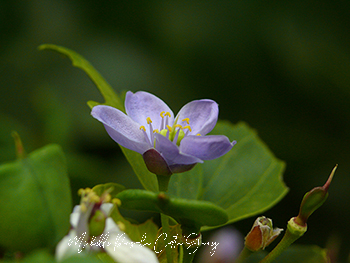

The wood of the Wayaca is known for being very dense and very heavy, and the tree itself is considered evergreen in the sense that it remains green throughout the year, even during extremely dry seasons. The flowers of the Wayaca are attractive and very varied in color. A cluster of Wayaca flowers on the tree consists of flowers with different shades ranging from (dark) lilac to almost snow-white. The color intensity reveals which flowers have just opened from the bud and which flowers have been pollinated by butterflies or bees and are beginning to transform into the bright orange seed pods. When the flower is still lilac, it is fresh and new. As soon as the flower is pollinated, it loses its lilac color and becomes lighter, until it is completely white, just before the petals fall off and the still-green seed pod forms.
The seed pods are initially glossy light green in color until the seeds ripen and the surrounding seed pod turns bright orange. At the supreme moment, the seed pods burst open, revealing the black seeds, still surrounded by a thin membrane of bright red flesh. Many birds love these seeds, and once the tree is full of them, Chuchubis or Tropical mockingbirds and other bird species are also frequent visitors to the tree.
English name: Lignum vitae (sometimes Roughbark Lignum vitae)
Papiamentu/Papiamento name: Wayaca/ Wayaká (B,C)
Scientific name: Guaiacum officinale
Family: Zygophyllaceae
Occurrence (ABC islands): native on Aruba, Bonaire and Curaçao
Publications used:
- Proosdij, A.S.J. van 2012. Arnoldo’s Zakflora: Wat in het wild groeit en bloeit op Aruba, Bonaire en Curaçao. 318 pp. Walburg Pers, Zutphen.
- van Buurt, Gerard. 2014. Caquetío words in Papiamentu/ Some names of animals and plants in Papiamentu. (download here: Book to download: Caquetío words in Papiamentu/ Some names of animals and plants in Papiamentu – Gerard van Buurt – Caribbean Footprint
- Dutch Caribbean Species Register
- The Online Flora of Curaçao
- Plants of the World Online
- Useful Tropical Plants
- Wikipedia

Wayaca (Guaiacum officinale)
De populaire en opvallende inheemse lokale boom Guaiacum officinale heeft naast de wetenschappelijke naam verschillende andere namen die varieren van eiland to eiland en van locatie tot locatie op de ABC-eilanden. Palu di pùzel is één van de namen voor deze boom, een naam dat vooral in de omgeving van Bandabou op Curaçao wordt gebruikt, vanwege het ingewikkelde patroon op de schors dat soms op een puzzel lijkt. De formelere naam in het Papiamento is Wayaca, in het Engels Lignum vitae en in het Nederlands Pokhout. Maar ook Wayaká met een k is een spelvorm van de naam in de Papiamentse spelling van Bonaire en Curaçao. De naam Wayaca is een oude inheemse naam die de oorspronkelijke bewoners van het eiland aan de boom gaven voordat de Spanjaarden het eiland ‘ontdekten’.
Karakteristieken
Alle foto’s Michelle Pors-da Costa Gomez
Het hout van de Wayaca staat bekend als zeer dicht en zeer zwaar, en de boom zelf wordt gezien als groenblijvend in de zin dat hij altijd groen blijft, zelfs in extreem droge seizoenen. De bloemen van de Wayaca zijn aantrekkelijk en zeer gevarieerd van kleur. Een tros Wayaça bloemen aan de boom bestaat uit bloemen met verschillende tinten (donker) lila tot bijna sneeuwwit. Aan de kleurintensiteit is te zien welke bloemen net nieuw uit de knop zijn en welke bloemen door vlinders of bijen zijn bevrucht en beginnen te veranderen in de feloranje zaaddozen. Als de bloem nog lila is, is hij vers en nieuw. Zodra de bloem bevrucht is, verliest hij zijn lila kleur en wordt hij lichter, tot hij helemaal wit is, vlak voordat de bloemblaadjes afvallen en de, nog groene, zaaddoos zich vormt.
De zaaddozen zijn eerst glanzend lichtgroen van kleur totdat de zaden rijp zijn en de zaaddoos eromheen verkleurt naar feloranje. Op le moment suprème barsten de zaaddozen open en zijn de zaden zwarte zaden, dan nog omringd met een dun vliesje felrood vruchtvlees te zien. Veel vogels zijn dol op deze zaden en zodra de boom er vol mee zit zijn ook de Chuchubi’s of Caribische spotlijsters en andere vogelsoort een veel geziene gast in de boom.
Nederlandse naam: Pokhout
Papiamentse naam: Wayaca/ Wayaká (B,C)
Wetenschappelijke naam: Guaiacum officinale
Familie: Zygophyllaceae
Voorkomen (ABC eilanden): Aruba, Bonaire en Curaçao (inheems)
Gebruikte literatuur:
- Proosdij, A.S.J. van 2012. Arnoldo’s Zakflora: Wat in het wild groeit en bloeit op Aruba, Bonaire en Curaçao. 318 pp. Walburg Pers, Zutphen.
- van Buurt, Gerard. 2014. Caquetío words in Papiamentu/ Some names of animals and plants in Papiamentu. (download here: Book to download: Caquetío words in Papiamentu/ Some names of animals and plants in Papiamentu – Gerard van Buurt – Caribbean Footprint
- Dutch Caribbean Species Register
- The Online Flora of Curaçao
- Plants of the World Online
- Useful Tropical Plants
- Wikipedia