This post is also available in: Dutch (below)
Bird photographers do the craziest things to capture a beautiful image on camera. However, it is extremely important to be very careful while doing so, to avoid causing damage to nature and the habitat, or to avoid harassing the birds to take the perfect photo. Unfortunately, this is something we see happening far too often, even here on our small islands of Aruba, Bonaire and Curaçao. It is not okay to stalk a bird’s nest just to take a photo of eggs or chicks at all costs. It is not okay to provoke and scare animals just to get that amazing flight shot, as is all too often done by so-called tourist guides and tourists, as well as by drone pilots who enjoy taking shots of flamingos flying from above and do not realize that the animals are terrified of that whizzing monster flying above them. It is not okay to break down plants and alter the surroundings of your photo so that everything looks perfect in the picture you want to take. By photographing Caracaras enjoying their favourite meal, you can illustrate how things can be done differently, with a healthy dose of patience and, above all, a healthy dose of respect for the animal. The recipe: Go to one of the most notorious areas for the illegal dumping of dead animals. Look for the carcass that looks the most slippery and rotten, stay at a respectable distance, and wait… calmly… for it to happen!
The result is a surprising photo reportage that not only allows you to take pictures of the animals eating but also provides insight into their behavior. For example, there is no chaos in the group; there is a very clear pecking order that regulates, among other things, who eats first and who eats last.
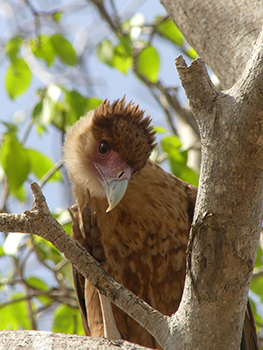
This young, immature Crested Caracara was the last one allowed to eat, so he had to wait his turn in a tree. He sneaked through occasionally and was immediately harassed by a whole swarm of flies while waiting. While scratching, it briefly seemed as if he was waving at us.
English name: Crested caracara
Papiamentu/Papiamento name: Warawara
Scientific name: Caracara plancus
Family: Falconidae (Falcons and Caracaras)
Occurrence (ABC islands): native species on Aruba, Bonaire and Curaçao
Publications used:
- Boer, B. de, Newton, E. & Restall, R. 2012. Birds of Aruba, Curaçao and Bonaire. Ardea Christopher Helm, London.
- Pors-da Costa Gomez, M., Pors, L. 2021. Vogels van Curaçao. Book.
- Prins, T.G., Reuter, J.H., Debrot, A.O., Wattel, J. & Nijman, V. 2009. Checklist of the birds of Aruba, Curaçao and Bonaire, South Caribbean. Ardea 97: 137-268.
- Wells, J.V. & Wells, A.C. 2017. Birds of Aruba, Bonaire, and Curaçao: a site and field guide. 474pp. Cornell University Press.
- Debrot, A.O. 2006. Preliminary checklist of extant and fossil endemic taxa of the ABC-Islands, Leeward Antilles. 29pp.
- Dutch Caribbean species register
Ethische natuurfotografie (1)
Vogelfotografen doen de gekste dingen om een mooi beeld te krijgen op de camera. Maar het daarbij bijzonder belangrijk om heel voorzichtig te zijn terwijl je dat doet, om geen schade aan de natuur en leefomgeving te veroorzaken of de vogels lastig te vallen om de perfecte foto te maken. Helaas is dit toch iets wat we te veel zien gebeuren, ook hier op ons kleine eiland Curaçao. Het is niet ok om vogelnest te stalken om maar coûte que coûte een foto van eieren of jongen te maken. Het is niet ok om dieren te provoceren en bang te maken, alleen om die geweldige flight shot te maken, zoals ook door zogenaamde toeristische gidsen en toeristen maar al te vaak wordt gedaan, en ook door drone vliegers die het zo leuk vinden om van boven vliegende flamingo opnamen te maken en zich niet beseffen dat de dieren als de dood zijn voor dat zoevende monster dat boven ze vliegt. Het is niet ok om planten af te breken en de omgeving van je foto te veranderen zodat alles er perfect uitziet op dat plaatje dat je wilt maken.
Met het fotograferen van Caracara’s die genieten van hun favoriete maaltijd kun je illustreren hoe het anders kan, met een flinke dosis geduld en vooral een flinke dosis respect voor het dier. Het recept: Ga naar een van de meest bekende gebieden voor het illegaal dumpen van dode dieren. Zoek naar het kadaver dat het meest glibberig en verrot oogt, blijf op een respectabele afstand en wacht…rustig…af!
Het resultaat is een verrassende foto reportage waarbij niet alleen foto’s van de etende dieren kunnen worden gemaakt maar waar je ook inzage krijgt in het gedrag van deze dieren. Zo bestaat er bijvoorbeeld geen chaos in de groep, er is een hele duidelijke pikorde die onder andere regelt wie als eerste en wie als laatste eet.
Deze jonge onvolwassen Kuif Caracara was de laatste die mocht eten, en moest dus op zijn beurt wachten in een boom. Hij sneakte er af en toe tussendoor en werd bij het wachten direct belaagd door een hele rits vliegen. Tijdens het krabben leek het even of hij naar ons zwaaide.
Nederlandse naam: Kuifcaracara
Papiamentse naam: Warawara
Wetenschappelijke naam: Caracara plancus
Familie: Falconidae (Valkachtigenb)
Voorkomen (ABC eilanden): Aruba, Bonaire en Curaçao (inheems)
Gebruikte publicaties:
- Boer, B. de, Newton, E. & Restall, R. 2012. Birds of Aruba, Curaçao and Bonaire. Ardea Christopher Helm, London.
- Pors-da Costa Gomez, M., Pors, L. 2021. Vogels van Curaçao. Book.
- Prins, T.G., Reuter, J.H., Debrot, A.O., Wattel, J. & Nijman, V. 2009. Checklist of the birds of Aruba, Curaçao and Bonaire, South Caribbean. Ardea 97: 137-268.
- Wells, J.V. & Wells, A.C. 2017. Birds of Aruba, Bonaire, and Curaçao: a site and field guide. 474pp. Cornell University Press.
- Debrot, A.O. 2006. Preliminary checklist of extant and fossil endemic taxa of the ABC-Islands, Leeward Antilles. 29pp.
- Dutch Caribbean Species Register